
Trump Tightens Student Visa Rules, Caps Stay In US At 4 Years; Academic Flexibility Also Curtailed | India News
Last Updated:
The rule also places limits on when and how students can change their major or academic programme, reducing the flexibility many universities say is essential for higher education.




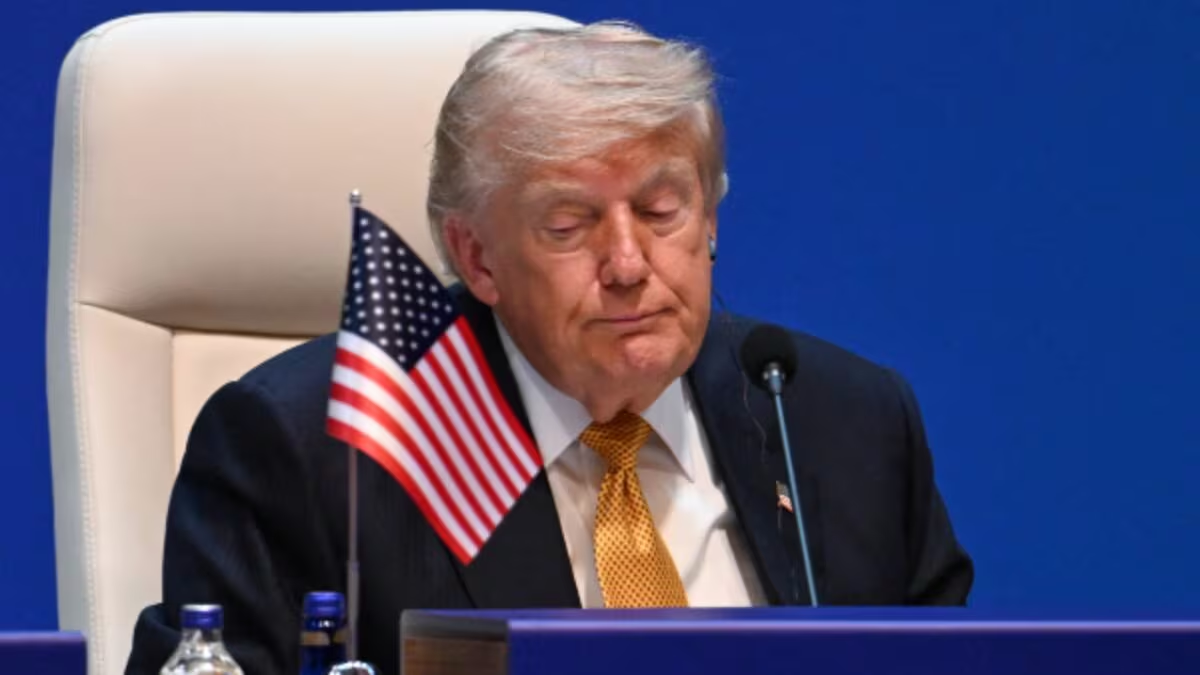
US President Donald Trump. (AFP photo)
The Trump administration has unveiled a sweeping overhaul of US student visa rules, capping the stay of most international students at four years and imposing new restrictions on changing academic programmes, in a move officials say will strengthen immigration oversight.
The new rule, announced by the Department of Homeland Security (DHS), will come into effect in September and marks a significant shift from the long-standing policy under which international students could remain in the United States for the duration of their academic programme.
Under the revised framework, students seeking to stay beyond four years will have to obtain approval from the federal government.
The rule also places limits on when and how students can change their major or academic programme, reducing the flexibility that many universities say is essential for higher education.
DHS Secretary Markwayne Mullin defended the policy, saying it would close a loophole that allowed some students to prolong their stay by repeatedly extending their studies.
“By implementing clear, finite limits on these visas, the United States is reclaiming its ability to properly screen, vet, and monitor individuals within our borders,” Mullin said. “This final rule ensures that foreign students remain focused on their primary purpose: completing their studies and returning home.”
The changes have drawn criticism from higher education groups, which argue that international students are already subject to extensive scrutiny and that the new requirements will create unnecessary administrative hurdles.
“This action is unnecessary and duplicative,” said Zuzana Wootson, deputy director of federal policy at the Presidents’ Alliance on Higher Education and Immigration. She noted that international students are among the most closely monitored non-immigrant groups in the US and are already overseen by both DHS and academic institutions.
The new regulations are the latest in a series of measures targeting international students under the Trump administration.
Earlier this year, the administration tightened visa screening by requiring applicants to disclose their social media accounts and expanded travel restrictions affecting several countries across Africa, the Middle East and Asia. It also carried out widespread terminations of student legal status, prompting many to leave the country or go into hiding over fears of detention.
The policy comes as international student enrolment in the US has already begun to decline, raising concerns among universities that rely heavily on overseas students, who typically pay full tuition and are not eligible for federal financial aid.
Education leaders warned that the new visa restrictions could make the US a less attractive destination for global talent.
“At a time when global competition for talent is intensifying, this policy sends exactly the wrong message,” said Fanta Aw, CEO of NAFSA, an association representing international education. “It tells the world’s brightest students and scholars that the United States is becoming less welcoming, less predictable, and less committed.”
About the Author

Covering day-to-day national and international news for the last nine years across print and digital. Associated with News18.com as Chief Sub-Editor since 2022, covering innumerable big and small even…Read More
Read More