
India’s Education Spend At 14.2%, Below UNESCO’s 15% Benchmark; GDP Share At 4.1% | Education and Career News
Last Updated:
Under the Education 2030 framework, countries have agreed to spend 4-6% of GDP or 15-20% of total public expenditure on education.




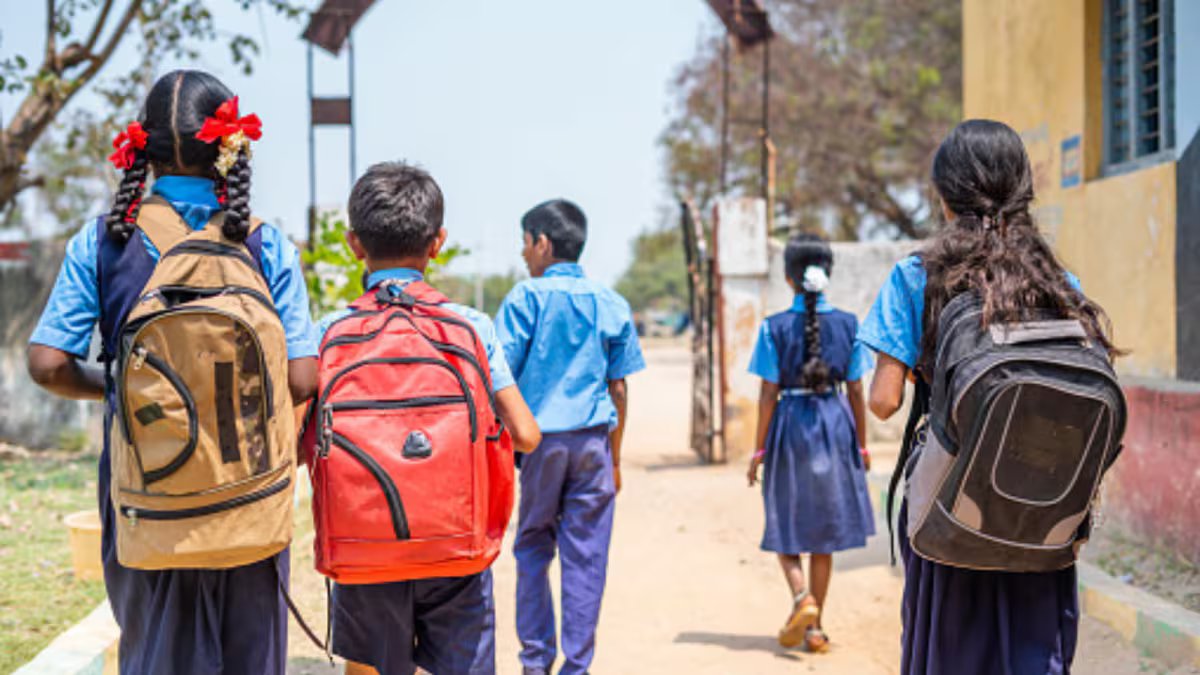
The lower-secondary completion rate is 86%, compared with the 2025 target of 99%. (File pic for representation)
India continues to spend enough on education to meet UNESCO’s minimum benchmark as a share of GDP, but its share of total government spending remains below the required level.
According to UNESCO’s 2026 SDG 4 Scorecard, India spends 4.1% of its GDP on education, slightly above minimum benchmark of 4%. However, education accounts for only 14.2% of total government expenditure, below the minimum benchmark of 15%. The share has also fallen from 15.7% in 2015, while the GDP share has remained at 4.1%.
Under the Education 2030 framework, countries have agreed to spend 4-6% of GDP or 15-20% of total public expenditure on education. UNESCO uses the lower limits as the minimum benchmarks. India therefore meets the GDP requirement but falls short on the public spending requirement.
The funding gap is also reflected in school completion rates. The lower-secondary completion rate is 86%, compared with the 2025 target of 99%. Although the rate has improved from 81% in 2015, UNESCO classifies the progress as slow. It is also four percentage points below UNESCO’s more achievable 2025 benchmark of 90%, reported Economic Times.
The situation is more difficult at the upper-secondary level. The completion rate for Classes 9 to 12 is only 51%, against the 2025 target of 84%. Progress at this level has also been described as slow.
India is not the only country facing challenges in meeting education spending targets. Among major emerging economies, China spends 4% of GDP on education but only 11.9% of public expenditure. Brazil spends 5.6% of GDP and 12.9% of public spending, while South Africa meets both benchmarks with 6% and 19.1%, respectively. Indonesia, Bangladesh and Pakistan meet neither.
Similar trends are seen in richer countries. The US, UK, Germany and France meet the GDP benchmark but fall below the public spending target. Sweden and Switzerland meet both.
UNESCO says only 39 of 205 countries meet both financing benchmarks, while 72 meet neither. Another 64 countries, including India, meet the GDP benchmark but fall short on public spending.
Government programmes such as Samagra Shiksha and PM-Poshan have expanded education and nutrition support. However, UNESCO’s findings point to a wider global trend of countries moving away from public education financing targets.
About the Author

A team of reporters, writers and editors brings you news, analyses and information on college and school admissions, board and competitive exams, career options, topper interviews, job notifications, …Read More
August 10, 2026, 15:50 IST
Read More