
‘English An Indigenous Language?’: Social Media Calls SC’s Question ‘Sensible’, Says ‘Teach Civic Sense Instead’ | Education and Career News
Last Updated:
Justice Joymalya Bagchi earlier questioned the terminology used in the CBSE 3-language policy, suggesting that the phrase “native Indian language” may need to be revisited.




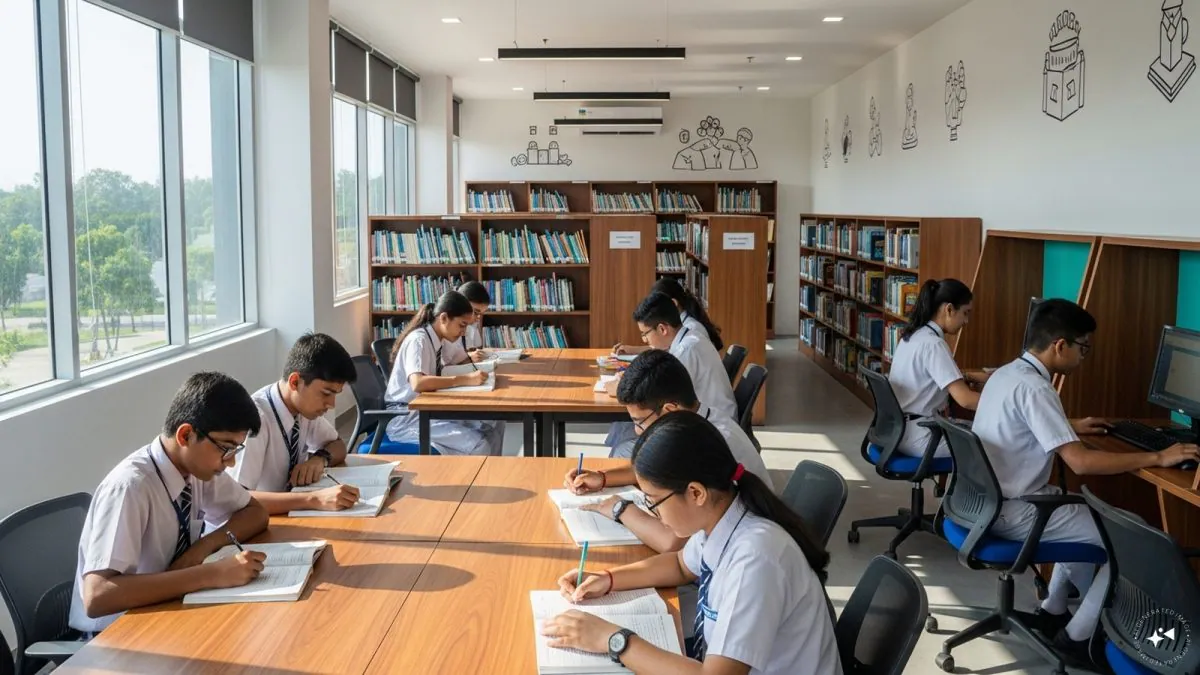
CBSE has made it clear that the third language will be assessed only through an internal school-based assessment. (AI Image)
The Supreme Court on Tuesday raised questions over whether English can be regarded as an indigenous Indian language while hearing petitions challenging the CBSE’s implementation of the National Education Policy (NEP) 2020’s three-language framework.
During the hearing, Justice J. Joymalya Bagchi questioned the terminology used in the policy, suggesting that the phrase “native Indian language” may need to be revisited. “…Can India consider English as an indigenous Indian language? Parsi at one time was the official language of the court,” Justice Bagchi observed.
The remarks triggered a debate on microblogging site X, with users expressing differing views on the issue.
One user wrote, “This is why judicial scrutiny matters. Sometimes one word in a policy changes everything. What exactly is ‘native’? Is it origin, usage, constitutional recognition, or the language a child has actually grown up speaking? Unless that is clearly defined, implementation will remain a challenge.”
Another user commented, “Sensible question from the Supreme Court. Instead of introducing a third language, schools should teach civic sense as a subject. Ten years down the line, we may have a more civic-minded India.”
Offering a contrasting perspective, another user said, “I think not mastering English has caused incalculable harm to this country. This is my personal opinion. I completed my entire education—from school to post-graduation—in Hindi. When I joined the banking sector, I struggled for years because I couldn’t write or speak English fluently, and it was often humiliating. With competition now becoming global, one simply cannot afford not to learn English well.”
A third user pointed to East Asian countries, saying, “Why can’t we follow Japan, Korea and China, where people have progressed and prospered using their native languages?”
Sensible question from SC . Instead of the third language teach civic sense to the kids instead as a subject .10 years down the lane we will have a more civic India.— Arockia Rajasekhar (@arsrocky) July 15, 2026
I think not having English as a language to master, has done incalculable harm to this country. (my personal opinion).I did my entire education (right from school to post graduation) in Hindi.
When I entered my job into banking, I had to face this problem (not being able to…
— B S Gupta (@B_S_Gupta) July 15, 2026
‘Choice Left to States’
Appearing for the petitioners, senior advocate Gopal Sankaranarayanan argued that while the NEP leaves the choice of languages to individual states, its implementation has raised serious concerns. “Choice is left to the states,” he submitted.
Chief Justice of India Surya Kant had remarked, “Learning of language never goes waste,” as the Supreme Court declined to stay the CBSE’s three-language policy, which is set to be implemented from the 2026–27 academic session.
However, the Chief Justice acknowledged that the petitioners’ concerns had not been fully resolved despite the CBSE’s subsequent clarificatory circulars.
The Supreme Court questioned whether English can be considered an indigenous Indian language while hearing pleas challenging the NEP’s three-language policy.
About the Author

A team of reporters, writers and editors brings you news, analyses and information on college and school admissions, board and competitive exams, career options, topper interviews, job notifications, …Read More
Read More