
NCERT Covers Up Mohenjo-daro ‘Dancing Girl’ In Class 9 Textbook, Sparks Debate | Education and Career News
Last Updated:
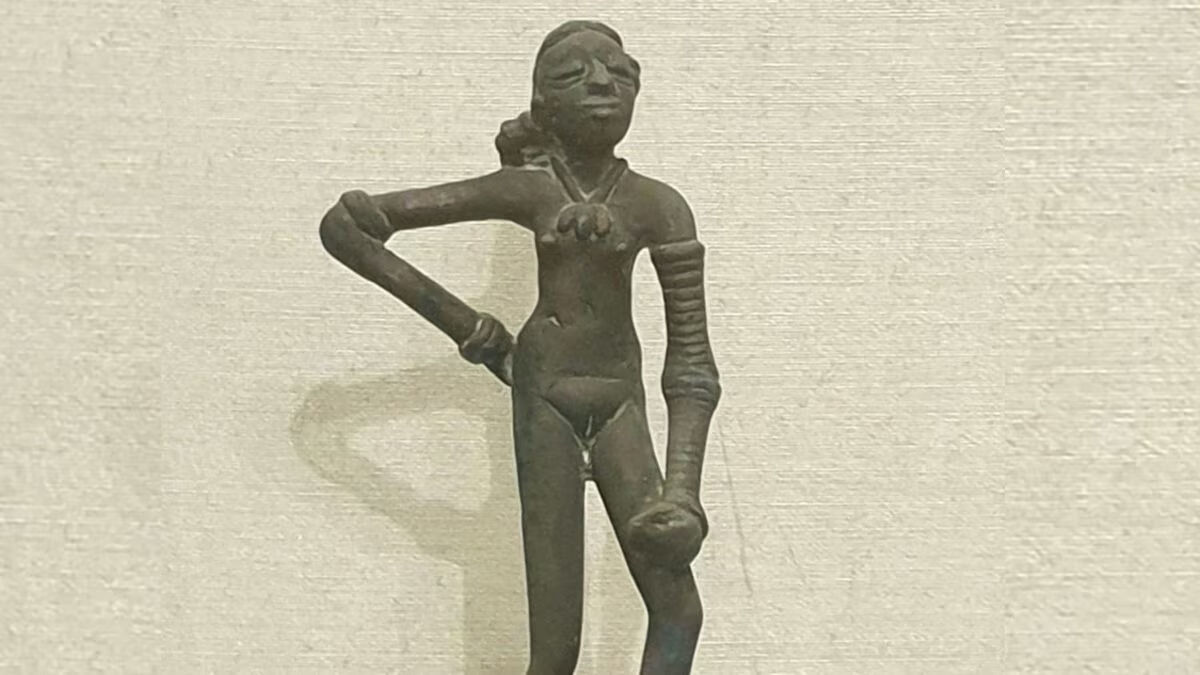
NCERT Class 9 Textbook: In the new version, shading has been added to cover the torso from the shoulders downward, making it look like the figure is clothed.




The ‘Dancing Girl’ has been part of NCERT textbooks for over 25 years, and earlier versions always showed the original form without covering it.
The “Dancing Girl” of Mohenjo-daro, a well-known artefact of the Indus Valley Civilisation, has been shown differently in a new NCERT textbook. In the updated image, the figurine’s bare upper body has been covered. Some NCERT members had objected to the figurine being shown nude, but the expert had argued against altering it.
The edited image appears in the first chapter, “History of Arts”, in Madhurima, a new Class 9 arts education textbook. In this version, shading has been added to cover the torso from the shoulders downward, making it look like the figure is clothed.
The “Dancing Girl” has been part of NCERT textbooks for over 25 years, and earlier versions always showed the original form without covering it.
“As soon as the issue came to notice, the concerned department was directed to look into the matter. Following consultations with experts, the department is replacing the image of the Dancing Girl with its original version. The correction is being implemented immediately in the digital version of the textbook, while the revised print editions will carry the original version of the image,” NCERT Director Professor Saklani said.
The new textbook is part of NCERT’s first arts education series, introduced under the National Education Policy (NEP) and National Curriculum Framework (NCF) to include arts in regular studies. So far, books from Classes 1 to 9 have been released.
The small bronze figurine, about four inches tall, was found at Mohenjo-daro. It shows a young girl with her hair tied in a bun and wearing bangles, a bracelet and a necklace. The original statue is kept in the National Museum in New Delhi.
Historians Object To Covered Figurine
Earlier, historian Michel Danino had said that NCERT had objected to placing the figurine at the start of a Class 6 chapter because of its nude form, fearing it could be controversial. He had argued that if it was considered inappropriate, then children should not be allowed to visit the National Museum either, where the same figure is displayed. In the end, he agreed to move the image inside the chapter and make it smaller, but it was still included in its original form.
When asked about the current change, NCERT Director Dinesh Prasad Saklani told the news agency there was no specific reason for it and pointed out that the original figurine still appears in the Class 6 Social Science textbook.
However, Danino criticised the new image in the Class 9 book. He said it was unfair to students and called the covering of the torso a form of censorship. According to him, the edited image also creates a version of the artefact that does not actually exist.
Danino is no longer part of NCERT’s textbook development team, having stepped down earlier after a separate controversy related to changes in a Class 8 Social Science textbook.
About the Author

Simran Babbar is a Senior Correspondent at CNN-News18, covering key developments in emerging sectors related to education and investigations. Through her reports, she brings significant updates from t…Read More
Read More