
IIT Delhi Graduate Builds Refrigeration System For Trucks, Could Cut Cooling Costs By 75% | Education and Career News
Last Updated:
Shaivee Malik and her team are attempting to address several challenges at once—reducing fuel consumption and cooling costs while potentially lowering emissions and food wastage.




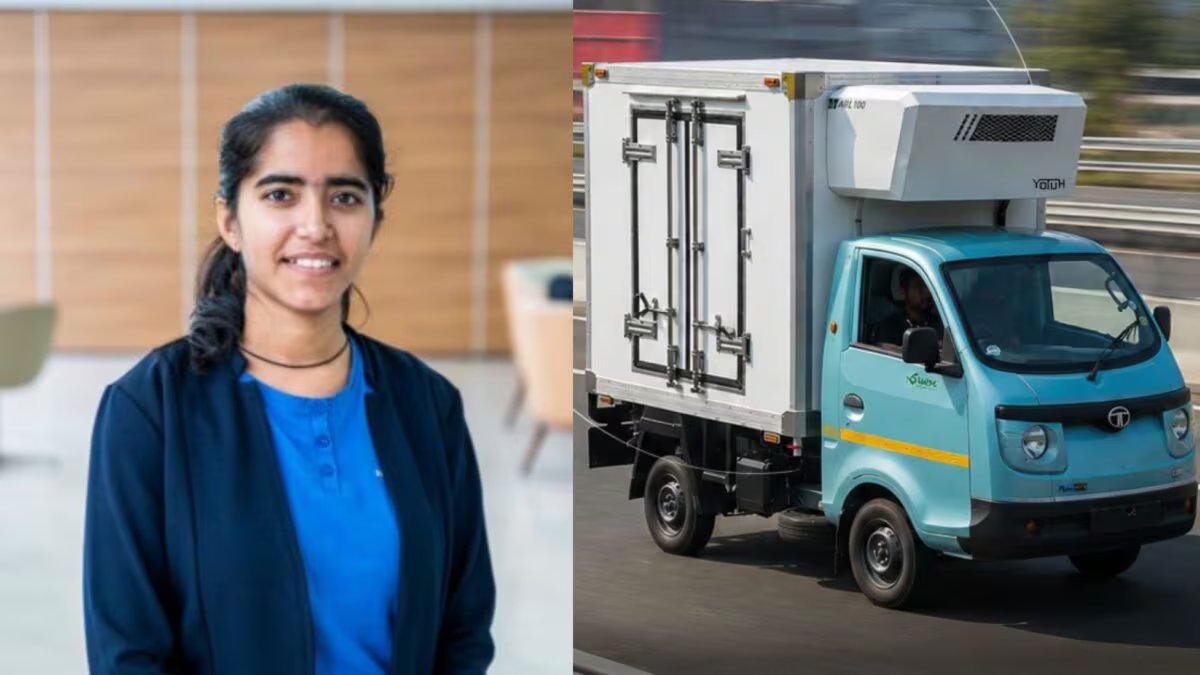
Shaivee Malik, along with Vivek Mahindrakar and Dharmik Bapodra, has developed an independent refrigeration system for trucks. (Image: LinkedIn)
Every day, huge quantities of fruits, vegetables, milk, ice cream and other frozen foods are transported across India. Keeping these perishable products at the right temperature throughout the journey is essential to prevent spoilage. However, conventional refrigeration systems used in trucks rely on the vehicle’s engine, increasing fuel consumption and transportation costs.
To address this challenge, 25-year-old IIT Delhi graduate Shaivee Malik, along with Vivek Mahindrakar and Dharmik Bapodra, has developed an independent refrigeration system for trucks.
A fridge that works without the truck engine
Shaivee Malik, a biotechnology graduate, and her team have developed a separate refrigeration unit that does not depend on the truck’s engine. Conventional refrigerated trucks generally use engine-powered cooling systems. When a truck is stuck in traffic or parked for long periods, the engine may have to keep running to maintain the required temperature, resulting in higher diesel consumption.
The new system aims to eliminate this dependence by allowing the refrigeration unit to function even when the truck engine is switched off.
How does it work
The refrigeration unit runs on a lithium-ion battery and can continue cooling the truck’s cargo independently of the engine. The technology can also provide a backup during situations such as a vehicle breakdown, helping protect temperature-sensitive goods.
According to available information, the system can operate for around six to eight hours on a single charge.
Claims to reduce cooling costs by up to 75%
One of the biggest advantages claimed for the technology is its potential to lower refrigeration costs. According to available reports, the system can reduce refrigeration operating costs by around 75%.
This could be particularly useful for businesses transporting large quantities of dairy products, ice cream, fruits, vegetables and frozen foods.
The technology could also help reduce emissions. Reports indicate that a single unit could potentially prevent around three to 36 tonnes of carbon dioxide emissions annually, depending on how it is used.
The innovation has reportedly moved beyond the prototype stage and is now being used by paying customers. These include distributors associated with frozen-food businesses such as Amul Ice Cream and McCain.
Could help tackle food wastage
Maintaining the cold chain is critical when transporting perishable products. Even a temporary break in temperature control can cause fruits, vegetables, dairy products and frozen foods to deteriorate.
By allowing refrigeration to operate independently of the truck engine, Shaivee Malik and her team are attempting to address several challenges at once—reducing fuel consumption and cooling costs while potentially lowering emissions and food wastage.
For a country with a vast network of food transportation, such technology could offer a practical solution to a real-world problem and highlights how young innovators can use technology to improve everyday logistics.
About the Author

A team of reporters, writers and editors brings you news, analyses and information on college and school admissions, board and competitive exams, career options, topper interviews, job notifications, …Read More
August 26, 2026, 11:45 IST
Read More