

Do You Know This Indian Village Of 75 Homes Has Produced 51 IAS Officers? Check Which State It’s In
Every year, lakhs of young people in India sit the UPSC examination. Even after spending lakhs of rupees at renowned coaching centres in major cities such as Delhi, Hyderabad and Bangalore, becoming an IAS officer is far from easy. Yet there is one small village that has achieved something so extraordinary that the entire country looks upon it with pride. This tiny settlement, with only 75 households, has produced more than 51 IAS and IPS officers so far. Do you know which village it is?

Madhopatti in Uttar Pradesh’s Jaunpur district is that remarkable village. Today, it is known as India’s ‘village of officers’ or even the country’s ‘IAS factory’. What makes this place unique is that whichever lane you walk down, you are almost certain to meet a retired or serving senior officer. In a village of just 75 families, nearly every second house is believed to have produced an officer.
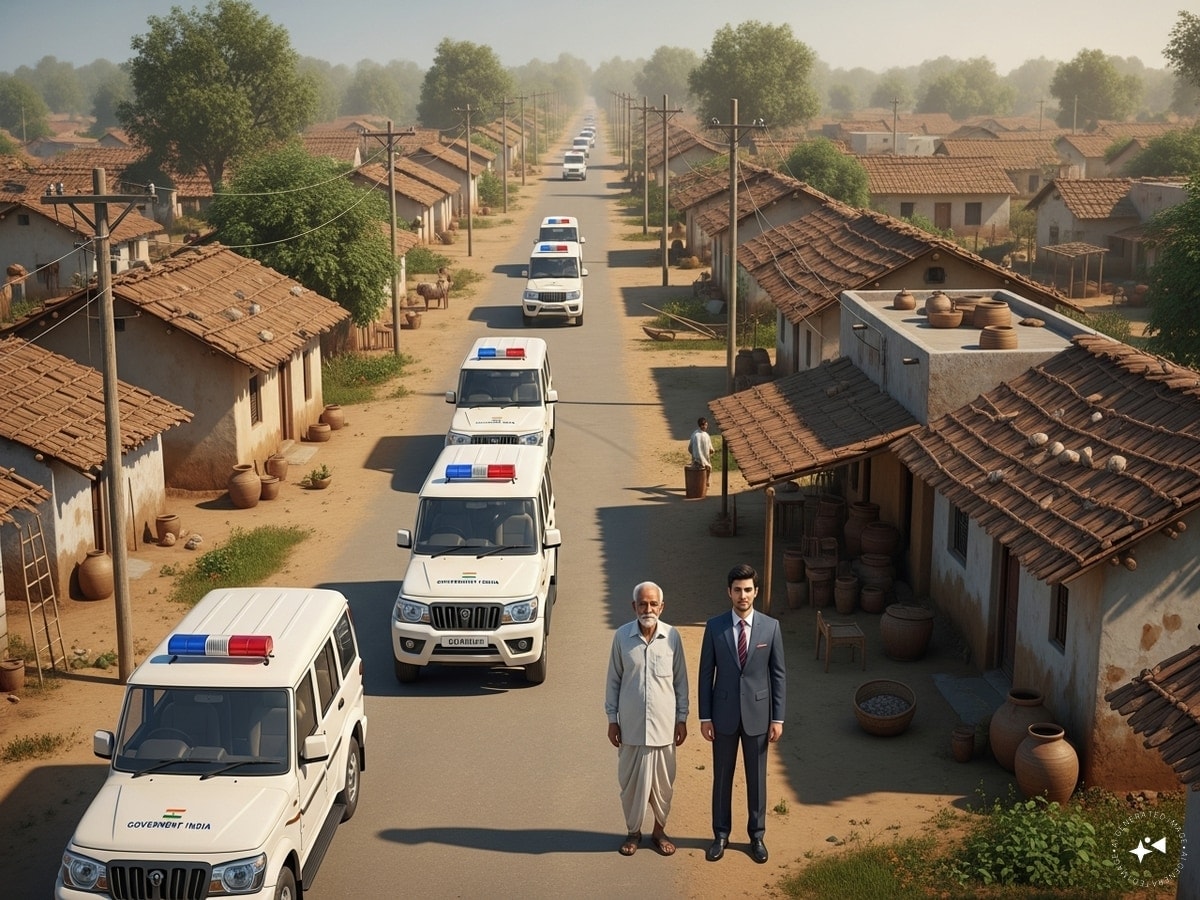
The village’s most extraordinary achievement is that four brothers from the same family became IAS officers. Vinay Kumar Singh (1955 batch), Chhatrapal Singh, Ajay Kumar Singh and Shashikant Singh all rose to top positions, setting a record in the country. Among them, Vinay Kumar Singh retired as the Chief Secretary of Bihar. Inspired by their success, other young people from the village began entering the civil services one after another.

This educational revolution in Madhopatti did not begin recently. In 1914, Mustafa Hussain laid the foundation of this tradition by joining the Civil Service during the British era. After Independence, in 1952, Prakash Singh was selected as an IFS officer. The IAS journey that began there has continued ever since. In 2002, Amitabh Singh brought further distinction to the village by securing the 298th rank.

While young people in cities spend huge sums on coaching, the youth of Madhopatti have taken a different path. There are no grand libraries or air-conditioned coaching centres here. Instead, the guidance of senior officers and the village’s academic culture have become the greatest strengths for its youth. Every student grows up looking up to senior officers from the village. Every child carries the confidence that if they could achieve it, so can we.

The talent from this village is not confined to becoming district collectors or police superintendents. Its youth have also held senior positions in international organisations such as ISRO, the Bhabha Atomic Research Centre (BARC), and the World Bank.

Every year, lakhs of young people in India sit the UPSC examination. Even after spending lakhs of rupees at prestigious coaching centres in cities such as Delhi, Hyderabad and Bangalore, becoming an IAS officer remains immensely challenging.

The principal reason behind Madhopatti’s astonishing success is its educational atmosphere and the guidance passed down by elders. This tradition, which began in 1914, has inspired every child in the village. Without relying on expensive coaching, young people here focus on self-study, drawing lessons from the experiences of senior officers. For children growing up in a village where even the district collector may be a neighbour, the civil services are not seen as an unattainable ambition, but as a natural way of life.