
School Phone Bans May Improve Academic Performance, But Gains Remain Modest: Harvard Study | Education and Career News
Last Updated:
The findings suggest that restricting phone use during school hours can improve students’ ability to focus on classroom learning. However, it is limited.




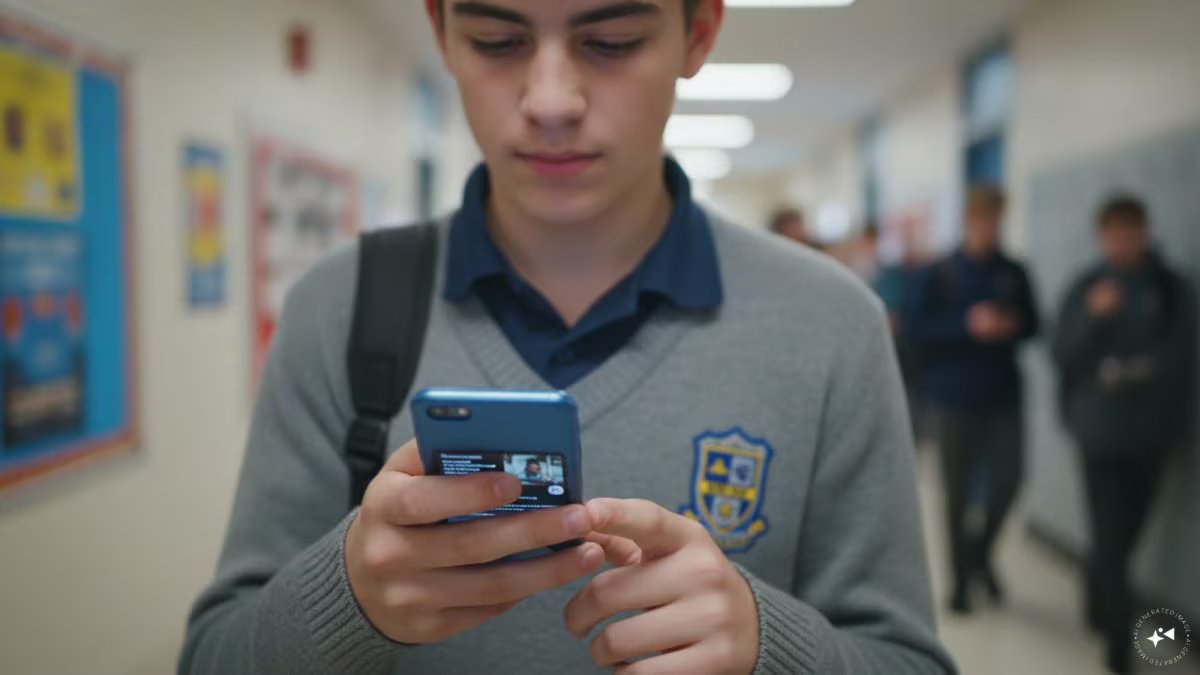
More than 40 US states have passed laws restricting cellphone use in schools in recent years. (AI Image)
Strict restrictions on mobile phone use in schools may help improve students’ academic performance, but the gains remain modest, according to a new study led by Harvard University’s Center for Education Policy Research.
The study analysed test scores of 3.3 million students across 4,600 schools in the United States and found that schools enforcing strict cellphone restrictions recorded slightly better academic growth than comparable schools without such rules, reported AP.
The researchers estimated that the improvement was equivalent to around one to two additional weeks of learning over an academic year. The study focused on students from Grades 4 to 10 and examined mathematics and reading test scores from the past five academic years.
The findings suggest that restricting phone use during school hours can improve students’ ability to focus on classroom learning. However, researchers cautioned that phone bans alone cannot address all the factors affecting academic performance.
The study found that schools requiring students to store their mobile phones in locked pouches throughout the school day recorded modest improvements in academic growth.
Thomas Kane, a Harvard professor and one of the study’s authors, said phone restrictions had a positive effect on learning but were not a complete solution to declining student achievement.
According to the researchers, the estimated improvement could accumulate over time if schools consistently enforce phone restrictions. The study noted that storing students’ phones could add one to two weeks of instruction each year.
More than 40 US states have passed laws restricting cellphone use in schools in recent years. However, the rules differ across states, with individual schools often deciding how to implement and enforce the restrictions.
The findings differ from a separate study published in May by researchers associated with the National Bureau of Economic Research (NBER), which found that strict cellphone bans had close to zero impact on test scores.
That study examined standardised test results, GPS-based phone activity, teacher surveys and data from schools using lockable phone pouches. While it found some modest positive effects on high school test scores, particularly in mathematics, the researchers said the overall academic benefits remained uncertain.
Thomas Dee, a Stanford education economist and one of the authors of the NBER study, said the early results of school phone bans were largely disappointing and raised questions about their effectiveness.
Researchers also pointed out that students could continue accessing social media and other digital platforms through school laptops and other devices, even when mobile phones were restricted.
Experts have also raised concerns about how effectively schools implement cellphone restrictions. Some students find ways to bypass the rules, including carrying spare phones or using other devices to access social media.
Psychologist Jean Twenge said that having a phone ban in place does not necessarily mean students follow it. She also highlighted the role of phone use outside school hours, particularly during study time and late at night.
Researchers said more evidence is needed to understand how students’ social media use outside school affects their academic performance. They also pointed to the need for technology companies to share data on children’s platform usage to help researchers examine its impact on learning.
Quick Answers
 Ask News18
A study led by Harvard University found that strict mobile phone restrictions in schools led to modest academic improvements, equivalent to about one to two additional weeks of learning over an academic year.
Ask News18About the Author

A team of reporters, writers and editors brings you news, analyses and information on college and school admissions, board and competitive exams, career options, topper interviews, job notifications, …Read More
November 19, 2026, 08:10 IST
Read More