
Jhak Maar Raha Hounga: Why An NCERT Class 7 Textbook Phrase Has Sparked Questions | Education and Career News
Last Updated:
Jhak Maar Raha Hounga phrase in a Class 7 textbook has sparked questions online. Here’s what the phrase means, why it is being discussed and the context behind it.




The debate over a colloquial Hindi phrase in a Class 7 textbook has raised wider questions about language and context in school education.
The language children encounter in school textbooks does more than introduce them to vocabulary. It also exposes them to different forms and registers of language, from formal Hindi and literary expressions to conversational and regional usage.
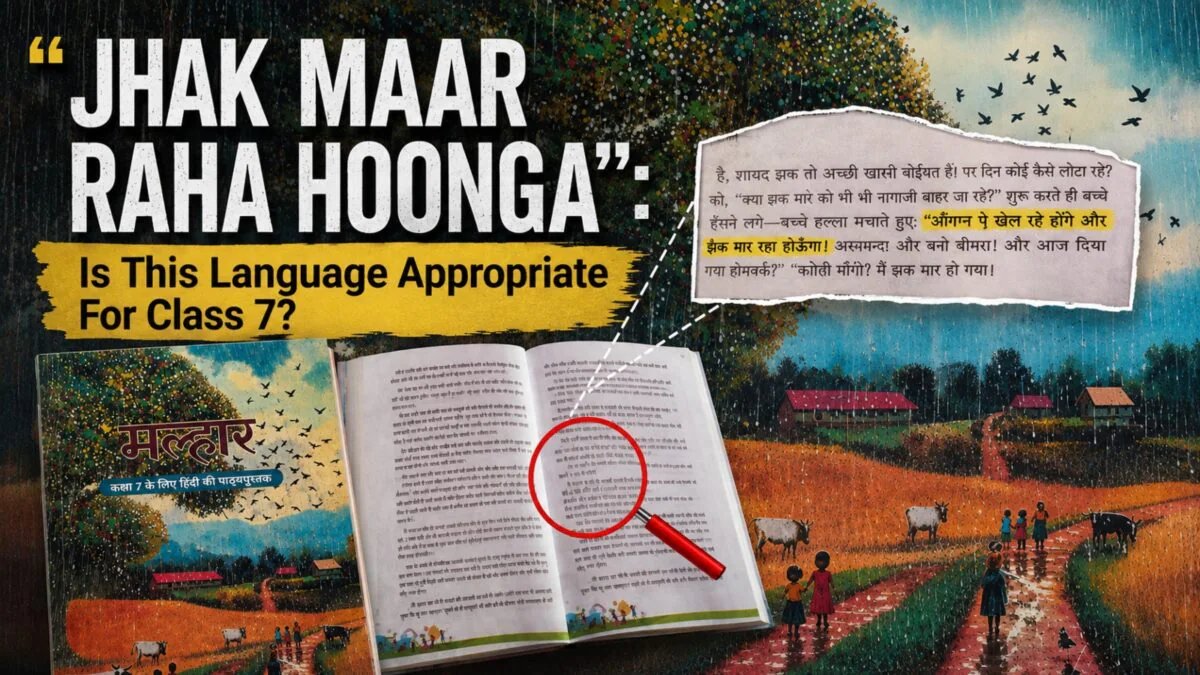
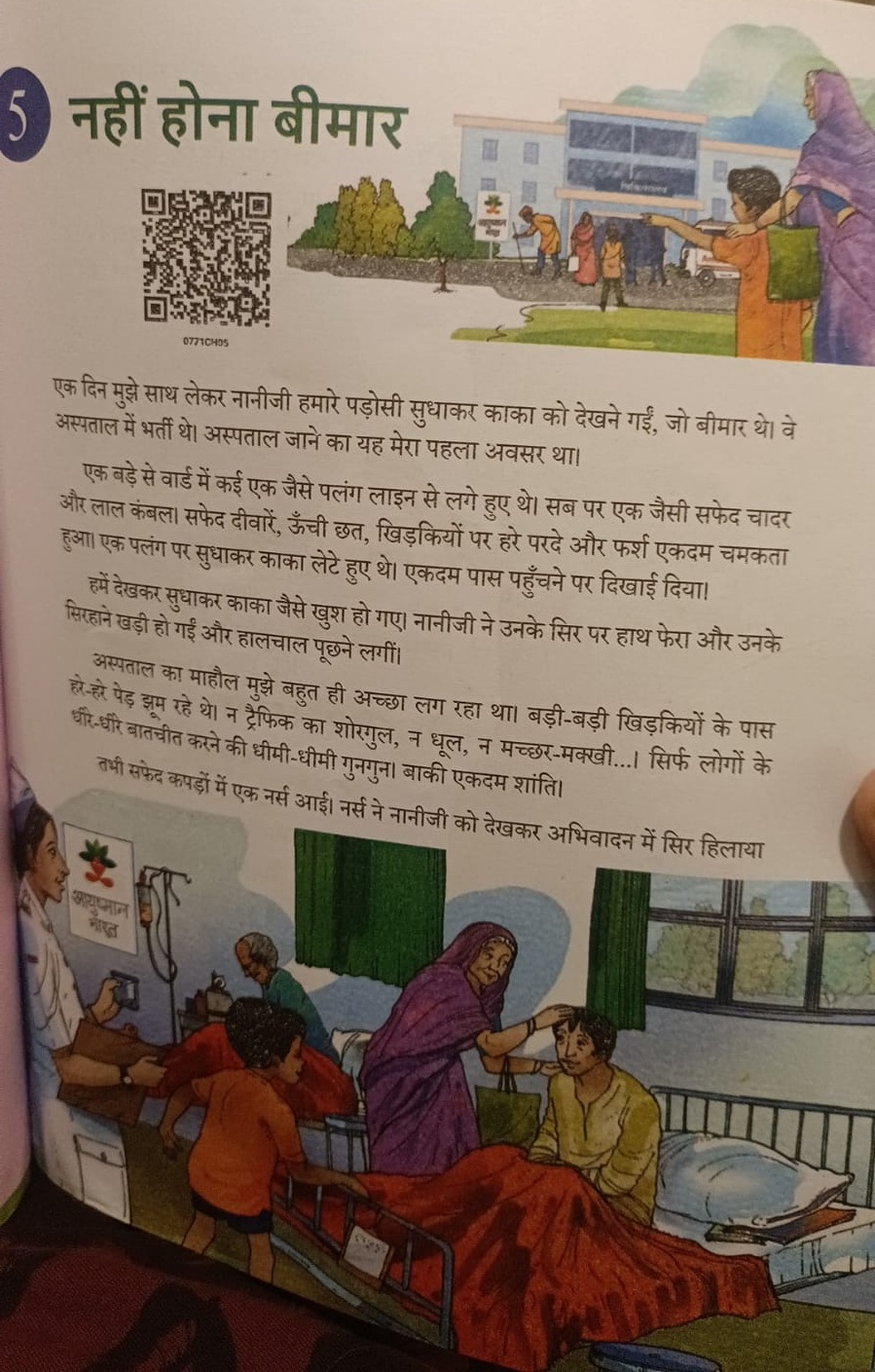
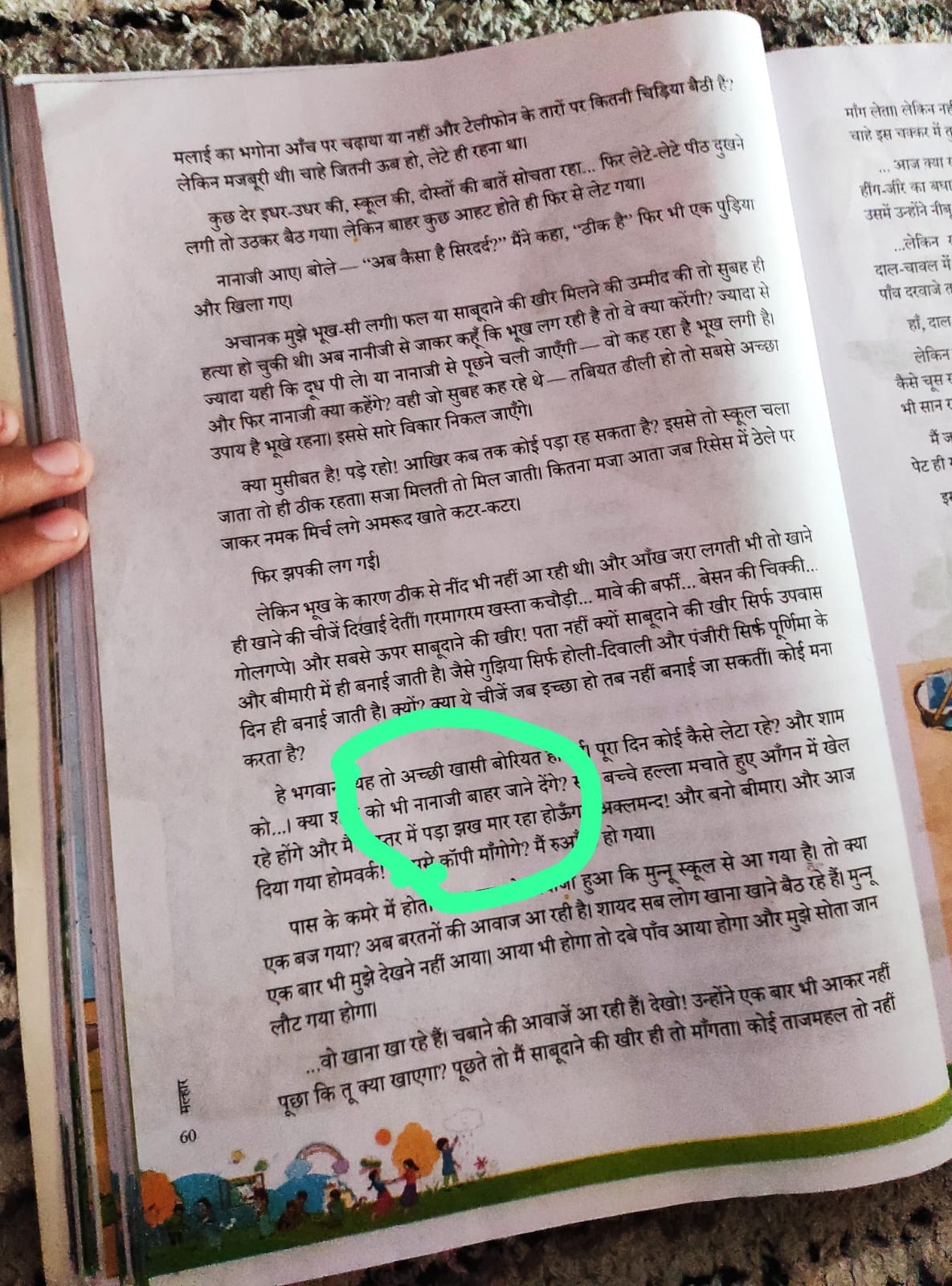
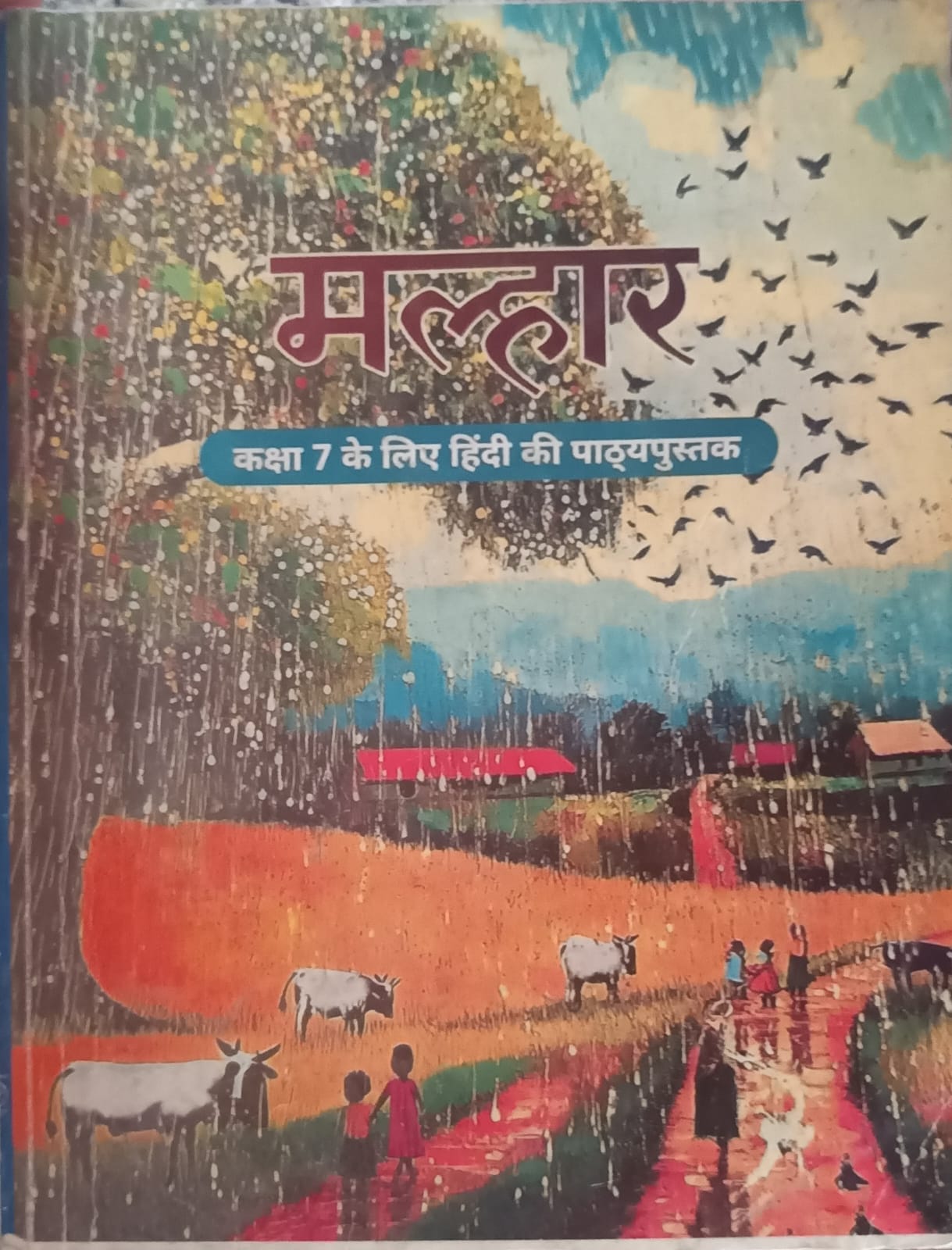
That has prompted questions about the use of the Hindi phrase “Jhak Maar Raha Hounga” in a Class 7 Hindi textbook. The phrase appears in Chapter 5, “Nahi Hona Bimaar,” by Swayam Prakash, in the NCERT textbook.
Some parents have questioned whether such a colloquial expression is appropriate for school-level educational material.
But the issue is not necessarily as simple as deciding whether the phrase is “good” or “bad” Hindi.
It also raises a broader question: when a textbook reproduces language from an author’s original work, should every colloquial expression be removed, or should students instead be taught what the expression means and when it is appropriate to use it?
What Does “Jhak Maarna” Mean?
‘Jhak maarna’ is an established Hindi idiomatic expression. Depending on the context, it can convey ideas such as being compelled to do something, having no alternative, or doing something in vain. Hindi reference material commonly lists meanings including ‘vivas hona’ and, in some contexts, wasting time or engaging in a futile activity.
Like many idioms, its tone depends on how it is used.
An expression that sounds perfectly natural in a conversation or literary passage may not necessarily be the kind of language a student would use in a formal letter, examination answer or official communication.
That distinction is at the heart of the discussion.
Why Has The Phrase Raised Questions?
For some parents, a school textbook carries an expectation beyond simply reproducing spoken language.
They may see textbooks as an important source of vocabulary and communication habits for children and therefore expect the language used in them to model clarity and appropriateness.
From that perspective, a strongly colloquial expression can prompt a reasonable question: Should children encounter it without an explanation of its tone and usage?
But there is another side to the argument.
Hindi literature and everyday speech contain hundreds of idioms, expressions and forms of speech that would not necessarily be used in formal communication. Removing all such expressions from literary material could also mean removing some of the flavour, character and cultural context of the original work.
Understanding An Expression Is Not The Same As Using It
This distinction is particularly important in language education.
A textbook can introduce a student to an expression without necessarily presenting that expression as the preferred form of communication in every situation.
For example, a student may learn the meaning of a colloquial phrase while also learning that a more formal expression would be appropriate in an application, essay or official communication.
In the case of “jhak maarna”, depending on the intended meaning, more formal alternatives could include expressions such as vivash hokar, majbooran or anichha se.
The important lesson, therefore, may not be simply use this phrase or don’t use this phrase.
It could be: understand the phrase, understand its tone and know the context in which it works.
Where Should Textbooks Draw The Line?
This is where the debate becomes more nuanced.
If a colloquial expression appears as part of an author’s original work, editing it out could potentially change the character or tone of the passage.
On the other hand, if students are expected to learn language from the textbook, parents may reasonably ask whether expressions with a distinctly conversational tone should be identified or explained.
Class 7 students are capable of learning that language changes according to context.
Formal Hindi, conversational Hindi, literary Hindi, regional expressions and idioms can all coexist. Teaching students to recognise those differences could itself become an important part of language education.
According to an NCERT official, there was “nothing wrong in this phrase.” The explanation was that the expression came from the author’s original work and that NCERT does not routinely alter an author’s original phrasing.
That distinction is important.
There is a difference between an editor deliberately choosing a colloquial phrase to teach children how to speak and a textbook reproducing an expression that already exists in a literary work.
If the latter is the case, removing every informal expression could potentially make literary texts less representative of the way characters and authors actually speak.
At the same time, that does not prevent textbooks from providing context.
Two Ways Of Looking At The Issue
One View: Context Matters
One way of looking at the issue is that students should encounter Hindi in its full range.
Literature frequently contains conversational, humorous, regional and culturally specific expressions. Understanding such language can help students interpret a text as it was originally written rather than encountering an artificially sanitised version.
Another View: Textbooks Also Set A Standard
Another perspective is that school textbooks have a different responsibility from ordinary literature.
Parents may expect educational material to model clear and appropriate communication, particularly while students are developing their understanding of formal language.
From this perspective, explaining a strongly colloquial expression could be preferable to simply presenting it without context.
Neither position necessarily requires the complete removal or unconditional acceptance of the phrase.
What Are Parents Likely To Consider?
Parents who are uncomfortable with the expression may not necessarily be concerned that children will immediately begin using it.
The concern could instead be about the role of textbooks in introducing language.
Some parents may believe children should encounter colloquial expressions because they hear them outside school every day. Others may prefer such expressions to be accompanied by an explanation of their meaning, tone and appropriate context.
That means the disagreement does not have to be reduced to a simple “remove it” versus “keep it” debate.
A middle approach could be to retain authentic language where it is relevant while helping students understand whether an expression is formal, informal, literary, regional or conversational.
A Larger Debate About Hindi
The discussion around “jhak maar raha hounga” ultimately touches on a much larger question about language education.
Hindi is both a formal literary language and a living language spoken in many social and regional contexts. Children encounter idioms, slang, dialects and conversational expressions outside school every day.
The challenge for textbook writers is to expose students to this linguistic diversity while also helping them understand the difference between what a phrase means, how it sounds and when it is appropriate to use it.
A textbook does not necessarily have to choose between formal Hindi and authentic language.
It can teach both.
The Phrase May Be The Lesson
The debate over “jhak maar raha hounga” may therefore be less about whether one expression should or should not appear in a Class 7 textbook.
The more useful question could be how students are taught to understand language in context.
An expression can be perfectly meaningful in a conversation or literary passage while being unsuitable for a formal setting. Teaching children to recognise that difference is an important part of becoming proficient in any language.
So, should every colloquial expression be removed from school textbooks?
Not necessarily.
Should students be taught what such expressions mean and where they fit?
That may be the more constructive lesson.
And in that sense, the discussion around one Hindi phrase opens up a much bigger conversation about how children learn not just words, but the context in which those words belong.
Key Questions Answered
 Ask News18
The debate over the phrase “Jhak Maar Raha Hounga” in a Class 7 Hindi textbook raises questions about language education, specifically whether textbooks should include colloquial language and how students are taught to understand language in context.
Ask News18About the Author

Nibandh Vinod is a seasoned journalist with nearly three decades of experience. He specialises in covering events and festivals and in driving SEO-focused content for News18.com. Tech-savvy and collab…Read More
August 17, 2026, 10:50 IST
Read More