

Independence Day 2026: Vande Mataram Full Lyrics In English And 5-Step Tutorial | Events News
Last Updated:
Vande Mataram Full Lyrics In English: Read the complete National Song of India and learn its words ahead of Independence Day 2026.




Vande Mataram is India’s National Song. The Har Ghar Tiranga tutorial guides citizens through five steps to learn and sing it ahead of Independence Day 2026. (AI Photo)
Vande Mataram Full Lyrics In English: As India prepares to celebrate its 80th Independence Day on August 15, 2026, Vande Mataram is set to take centre stage as citizens across the country join patriotic celebrations. This year is especially significant as India is marking 150 years of Vande Mataram, with a year-long national commemoration running from November 7, 2025, to November 7, 2026.
For those looking to learn the National Song ahead of Independence Day, the Har Ghar Tiranga campaign has a dedicated five-step Vande Mataram tutorial. The tutorial takes learners through listening to the song, understanding its narration, learning it line by line, practising with choir and solo renditions, and finally singing along with karaoke.
Read More: Vande Mataram To Be Sung At I-Day Parade: A Look At India’s National Song’s History
Har Ghar Tiranga Vande Mataram Tutorial: Learn To Sing In 5 Steps
The five-step tutorial has been designed to help citizens learn and sing Vande Mataram as part of the Har Ghar Tiranga celebrations.
The five steps are:
Step 1: Listen
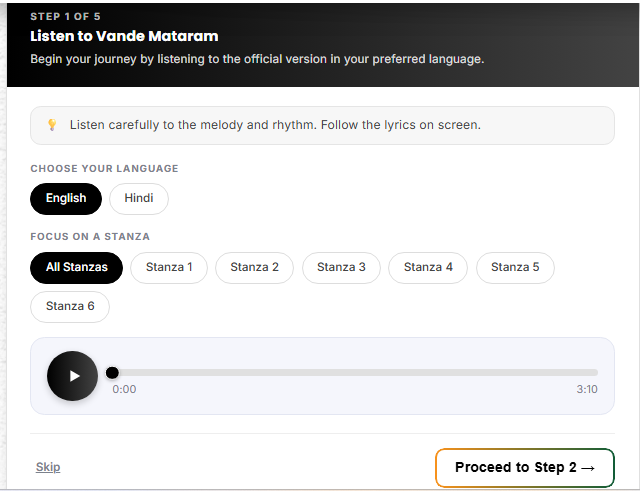
Listen carefully to the rendition to become familiar with the melody, pronunciation and flow of the song.
Step 2: Narration & Pronunciation
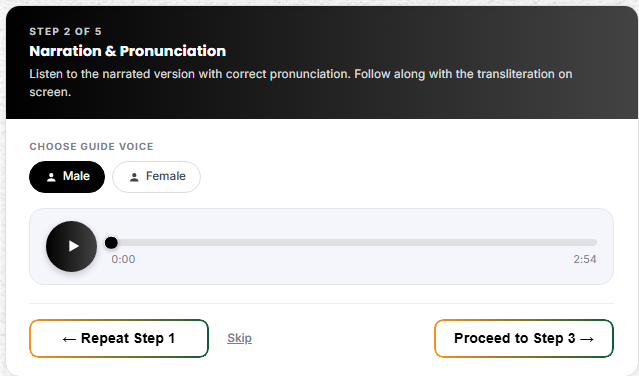
Understand the words and the context of Vande Mataram before attempting to sing it.
Step 3: Line-by-line
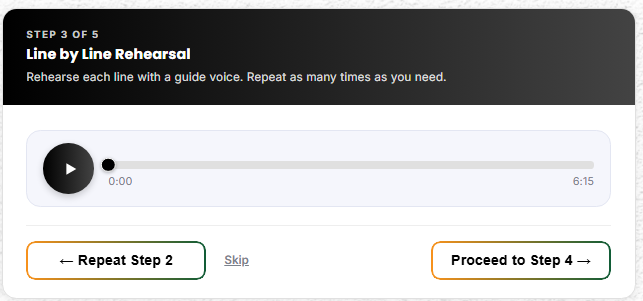
Learn the song one line at a time, making it easier to follow the pronunciation and rhythm.
Step 4: Choir and solo
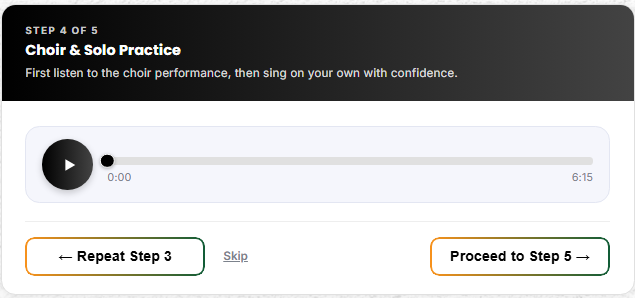
Listen to both choir and solo renditions to understand how the song can be performed individually as well as collectively.
Step 5: Karaoke
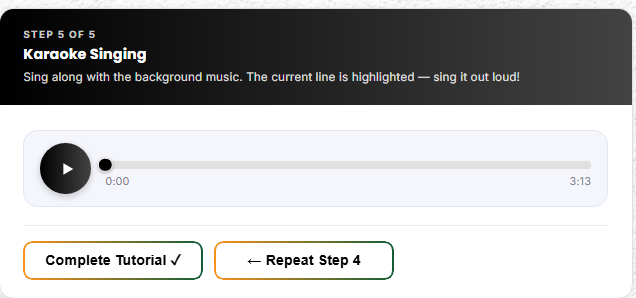
Practise singing along with the karaoke version once you are familiar with the lyrics and tune.
Vande Mataram Full Lyrics In English
The following English transliteration is reproduced from the Government of India’s Amrit Kaal Vande Mataram lyrics material. The official Amrit Kaal website provides the lyrics in English in PDF, JPG and PNG formats.
Vande Mataram Lyrics
Vande Mataram!
Sujalām suphalām malayaja-śītalām,
Śasya-śyāmalām Mātaram!
Vande Mataram!
Śubhra-jyotsnām pulakita-yāminim,
Phulla-kusumita druma-dala-śobhinim,
Suhāsinim sumadhura bhāṣinim,
Sukhadām varadām Mātaram!
Vande Mataram!
Koṭi-koṭi kaṇṭha kalakala nināda karāle,
Koṭi-koṭi bhujair dhṛta kharakaravāle,
Ke bole Mā tumi abale!
Bahubaladhāriṇim namāmi tāriṇim,
Ripudala-vāriṇim Mātaram!
Vande Mataram!
Tumi vidyā, tumi dharma,
Tumi hṛdi, tumi marma,
Tvam hi prāṇāḥ śarīre!
Bāhute tumi Mā śakti,
Hṛdaye tumi Mā bhakti,
Tomārai pratima gaḍi mandire-mandire.
Vande Mataram!
Tvam hi Durgā daśa-praharaṇa-dhāriṇī,
Kamala kamala-dala-vihāriṇī,
Vāṇī vidyā-dāyinī,
Namāmi tvām namāmi kamalām,
Amalām atulām,
Sujalām suphalām Mātaram!
Vande Mataram!
Śyāmalām saralām susmitām bhūṣitām,
Dharaṇīm bharaṇīm Mātaram!
Vande Mataram!
Click Here To Download The Official Vande Mataram English Lyrics PDF
What Does Vande Mataram Mean?
The words “Vande Mataram” broadly translate to “Mother, I Bow to Thee” or “I bow to the Mother”. The song personifies the motherland and praises its natural beauty, abundance, strength and nurturing qualities.
The opening verses describe the motherland as fertile, prosperous, cool and lush. They evoke moonlit nights, flowering trees and the beauty of the land.
Read More: Is Independence Day 2026 India’s 79th Or 80th? History And Facts Explained
The later verses move from descriptions of nature to ideas of strength, knowledge, devotion and sacrifice. The motherland is portrayed as a source of power, learning and spiritual inspiration.
Vande Mataram Meaning: What Do The Lyrics Say?
The opening lines praise a land filled with water, fruits, greenery and cool breezes. The imagery celebrates the beauty and abundance of the motherland.
The next section describes bright moonlit nights, flowering trees and the sweetness of the motherland’s speech. It presents the country as beautiful, prosperous and generous.
The following verses shift towards collective strength. The imagery of millions of voices and arms conveys the idea of a united people defending and serving their motherland.
Read More: Happy Independence Day 2026 Wishes: Best 15 August Quotes, Messages, Images And Status
The fourth and fifth sections describe the motherland as knowledge, faith, strength and devotion. They use religious and cultural imagery, including references to Durga, Kamala and Vani.
The final lines return to the image of the motherland as green, beautiful, smiling and nourishing.
Vande Mataram History: Who Wrote The National Song?
Vande Mataram was written by Bankim Chandra Chatterjee, one of the leading literary figures of 19th-century Bengal.
According to a Ministry of Culture/PIB backgrounder, the song was first published in the literary journal Bangadarshan on November 7, 1875. Bankim Chandra Chatterjee later incorporated it into his novel Anandamath, published in 1882.
Read More: Independence Day Quiz 2026: 30 Questions And Answers To Test Your Knowledge
The song subsequently became closely associated with India’s freedom movement and the Swadeshi and anti-Partition movements.
When Was Vande Mataram First Sung?
Rabindranath Tagore sang Vande Mataram at the 1896 session of the Indian National Congress in Calcutta, according to the Government of India’s backgrounder on the song.
During the anti-Partition and Swadeshi movement in Bengal in 1905, Vande Mataram gained enormous popularity as both a song and a political slogan.
The government backgrounder records that the slogan was first used politically on August 7, 1905, during a large procession in Calcutta associated with the movement to boycott foreign goods and promote Swadeshi.
Vande Mataram And India’s Freedom Movement
Vande Mataram became one of the most recognisable expressions of India’s nationalist movement.
Read More: Independence Day 2026: 80 Interesting Facts About Indian Independence Day You Should Know
It was sung at political meetings, processions and demonstrations and became particularly prominent during the Swadeshi movement. British authorities attempted to restrict its public use in parts of colonial India, while students and political activists continued to raise the slogan in protest.
The song also travelled beyond Bengal and became associated with the wider freedom struggle. Its refrain came to represent resistance to colonial rule and devotion to the motherland.
When Did Vande Mataram Become India’s National Song?
On January 24, 1950, President of the Constituent Assembly Dr Rajendra Prasad stated that Vande Mataram, because of its historic role in India’s freedom struggle, would be honoured equally with Jana Gana Mana. The statement was adopted, with Jana Gana Mana becoming the National Anthem and Vande Mataram the National Song.
Vande Mataram therefore holds a distinct constitutional-era national status alongside Jana Gana Mana.
Vande Mataram Turns 150 In 2026
Independence Day 2026 comes during a year-long national commemoration marking 150 years of Vande Mataram.
The nationwide commemoration was formally launched in November 2025 and is scheduled to continue until November 7, 2026. The programme includes mass singing, cultural events, exhibitions, musical performances and other activities designed to highlight the song’s role in India’s history.
The Government of India has also said that the Vande Mataram campaign and Har Ghar Tiranga campaign are being celebrated simultaneously, linking the song’s legacy with public participation in Independence Day celebrations.
As India celebrates Independence Day 2026, Vande Mataram’s 150-year journey offers a reminder of the song’s extraordinary transformation, from a literary composition by Bankim Chandra Chatterjee to a powerful expression of India’s freedom struggle and, eventually, the country’s National Song.
Key Questions Answered
 Ask News18
The 150-year commemoration of Vande Mataram will be celebrated with the song being sung from the ramparts of the Red Fort for the first time on Independence Day 2026. An Indian Air Force Mi-17 helicopter will carry a banner commemorating the anniversary and shower flower petals over the Red Fort gathering.
Ask News18About the Author

Nibandh Vinod is a seasoned journalist with nearly three decades of experience. He specialises in covering events and festivals and in driving SEO-focused content for News18.com. Tech-savvy and collab…Read More
Delhi, India, India
August 14, 2026, 09:38 IST