
‘Factories shut, roads silent’: Chinese envoy on smooth conduct of Gaokao exam, fuels debate on India’s JEE, NEET system | Education News
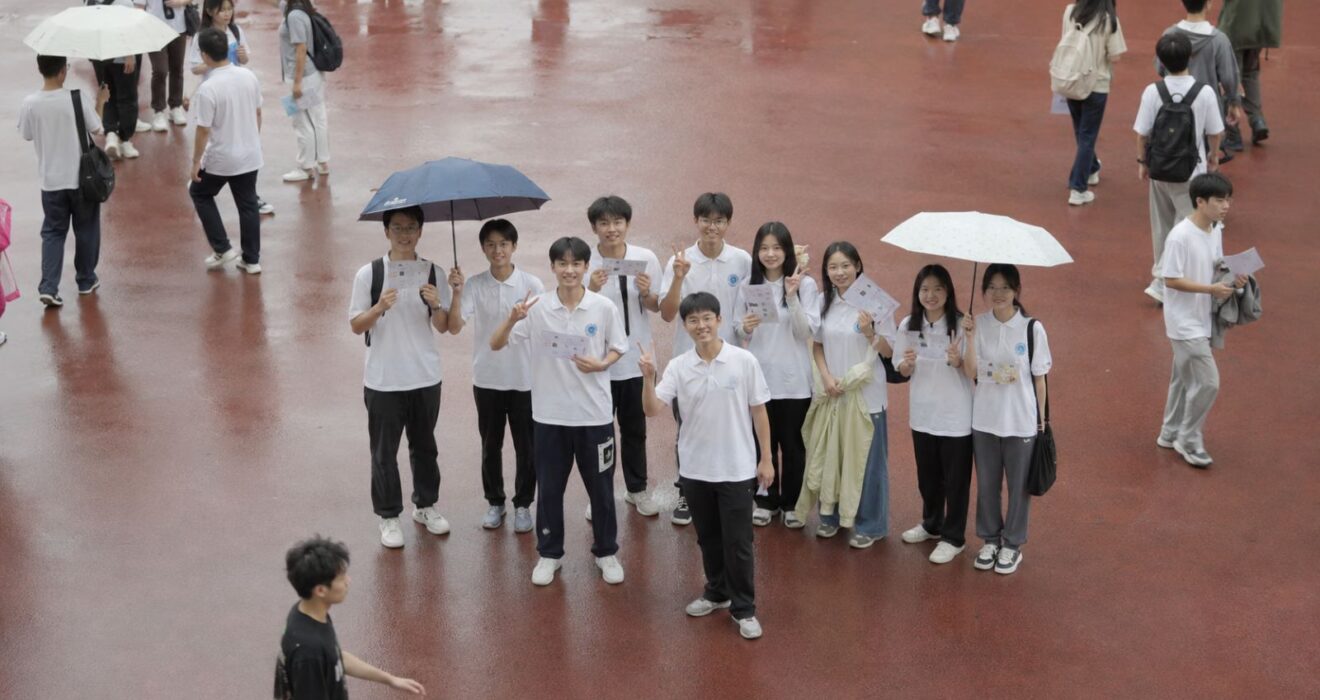
As NEET aspirants prepare for the retest and continue grappling with exam-related controversies, China has wrapped up its national university entrance examination on a scale that has virtually brought cities to a standstill. Nearly 12.9 million students appeared for the two-day Gaokao, with authorities implementing extraordinary measures, from traffic controls to noise restrictions, to ensure the smooth conduct of the exam.
Against this backdrop, a social media post by Yu Jing, the Chinese Embassy spokesperson in India, praising the conduct of the Gaokao has sparked debate online. While the post did not explicitly mention India, many users interpreted it as a subtle comparison with India’s examination system, which has faced scrutiny in recent years over paper leaks, technical glitches, and questions surrounding the administration of high-stakes tests such as NEET and JEE.
In the post, Yu Jing described the Gaokao as “the world’s largest exam” and compared it to India’s JEE and NEET examinations combined. She noted that around 1.3 crore students appeared for the test, adding that it was conducted smoothly over two days.
“Factories paused. Roads quieted. The entire nation rallied for its students,” she wrote, highlighting the extensive measures taken across China to facilitate the examination.
China’s Gaokao — the world’s largest exam & India’s equivalent of JEE/NEET rolled into one — was conducted smoothly for 1.3 crore students in just 2 days 🎓
Factories paused. Roads quieted. The entire nation rallied for its students.
चीन की गाओकाओ — दुनिया की सबसे बड़ी परीक्षा,… pic.twitter.com/aSbpL05suN
— Yu Jing (@ChinaSpox_India) June 10, 2026
https://platform.x.com/widgets.js
The 2026 ‘Gaokao’, China’s national college entrance examination, began on June 7. According to China’s Ministry of Education, as reported by state news agency Xinhua, the 12.9 million registrations this year mark a notable drop from 13.35 million participants in the previous year.
Xinhua reported that the Ministry of Education instructed local authorities to maintain a secure online environment for the exam and a safe, orderly environment around examination sites.
Read | JoSAA Seat Allotment: When did the 75% rule start; was it ever exempted?
Story continues below this ad
Special campaigns were launched to crack down on the sale of cheating devices, exam impersonation, and irregular practices by exam-preparation and training institutions. The ministry also guided local authorities in preventing and combating high-tech cheating and actively promoted the use of intelligent monitoring and inspection systems.
The security apparatus extended beyond anti-cheating measures. According to China Daily, citing a Ministry of Education announcement, local education departments and admissions agencies collaborated with cyberspace and public security authorities to target misconduct such as mobile phone cheating, sales of illicit cheating devices, impersonation, disturbances around test centres and unlicensed tutoring institutions. Authorities also worked to eliminate harmful information online, including fraud, fake admission advertisements, and rumours related to the examination.
According to state-owned media CGTN, authorities across China also put in place extensive candidate support systems during the examination period, including traffic management, medical assistance, noise-control measures and psychological counselling services. Drivers were urged to give way to vehicles carrying students, while the public was advised to avoid peak travel hours around examination centres.
How does it compare to India’s top entrance exams?
Story continues below this ad
The scale of the Gaokao often draws comparisons with India’s largest entrance examinations. While the two systems serve different purposes, both act as major gateways to higher education and shape the academic futures of millions of students every year.
One notable point is that China’s Gaokao is a generalist sorting mechanism designed to evaluate overall high school completion and distribute students across all undergraduate majors nationwide. Conversely, India’s exams like JEE and NEET are specialist elimination filters operating independently of high school graduation, built strictly to select top talent for ultra-competitive professional tracks like engineering and medicine.
What are the candidate numbers for entrance exams in India versus China?
In India, the largest entrance examination by candidate numbers in 2026 was NEET UG. A total of 22,75,011 candidates registered for the medical entrance test, with more than 22 lakh appearing for the examination across the country.
Story continues below this ad
The Common University Entrance Test for undergraduate admissions, CUET UG 2026, recorded 15,68,866 registrations. The examination was conducted over a 21-day window and covered thousands of subject combinations across multiple shifts.
The Joint Entrance Examination (JEE) Main 2026 saw 13.55 lakh registrations, with around 13.05 lakh candidates appearing for the test. The examination remains the primary gateway to admissions in NITs, IIITs, and several other engineering institutions.
| Country | Examination | Registrations (approx figures) | What the exam is for |
| China | Gaokao | 12,900,000 | National-level entrance exam |
| India | NEET UG | 2,275,011 | Medical undergraduate entrance |
| CUET UG | 1,568,866 | Undergraduate university entrance across multiple subjects | |
| JEE Main | 1,355,000 | Engineering entrance for NITs, IIITs, and others | |
| CUET PG | 714,621 | Postgraduate university entrance |
A comparison of the numbers shows the enormous scale at which both countries conduct entrance examinations. China’s Gaokao, with 12.9 million candidates, remains significantly larger than any single examination conducted in India.
However, unlike China’s singular entrance exam, India’s admissions ecosystem is spread across multiple national-level tests and for different domains, such as NEET, JEE Main, CUET UG, along with multiple state-level exams, which together account for more than five million registrations in 2026 alone.