
CBSE Three-Language Formula: As Students Must Learn Two Indian Languages, Can Sanskrit Build AI-Era Skills? | Education and Career News
Last Updated:
CBSE three-language policy: With the need for two Indian languages, Sanskrit has gained attention among schools and students. Can it survive the age of AI?




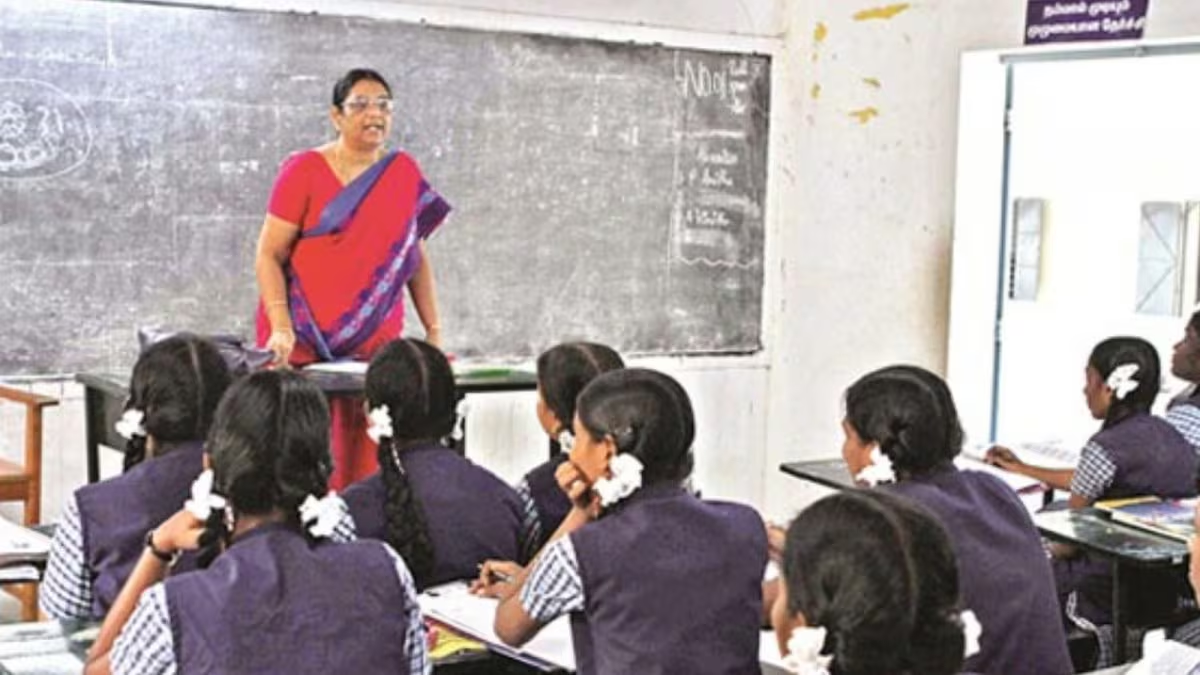
Petitioners claim many schools do not have trained language teachers or proper textbooks, making implementation difficult. (FIle Photo)
The Central Board of Secondary Education (CBSE) has introduced changes in the implementation of the three-language formula for students, focusing on multilingual learning while reducing unnecessary examination pressure. This includes learning two Indian languages from class 6.
Students who do not qualify in the Class 9 R3 (third language) assessment will not be detained and will continue to Class 10 for the 2027–28 academic session. However, they will be required to clear the pending Class 9 R3 assessment while studying in Class 10.
Sanskrit In The Age of AI
Considered as one of the oldest of all living languages, Sanskrit has gained attention among schools and students due to the need to learn two Indian languages. Known for its highly strctured grammar, Sanskrit emphasises precision, patterns, and logical relationships between words. These characteristics make it an interesting subject for students developing analytical skills in the age of Artificial Intelligence (AI).
AI systems rely on understanding language structures, patterns, and meanings. Studying Sanskrit can encourage logical thinking, attention to detail, and an understanding of how complex language systems are organised. These skills have relevance in areas such as programming, computational linguistics, and artificial intelligence.
Beyond technology, Sanskrit provides access to India’s rich intellectual traditions, including literature, philosophy, mathematics, science, and classical knowledge systems. It also helps students understand the linguistic roots of many Indian languages.
Meanwhile, the Supreme Court had expressed reservations regarding the introduction of a third language at the Class 9 level under the CBSE curriculum, observing that additional language requirements could increase stress for students preparing for Board examinations.
“No, that is very bad. Ninth standard is stressful. Why do you introduce a new language in 9th? You introduce it in 6th,” Justice B V Nagarathna said.
“Union of India, please don’t have third language in 9th standard. CBSE, ICSE, State Board, 10th standard is a board exam. From the end of 8th standard onwards, the pressure starts,” the Court had observed
The Supreme Court has expressed reservations about introducing a third language in Class 9 under the CBSE curriculum, stating it could increase stress for students preparing for board examinations.
About the Author

A team of reporters, writers and editors brings you news, analyses and information on college and school admissions, board and competitive exams, career options, topper interviews, job notifications, …Read More
Read More