
ABVP Conquers DUSU Polls: Have Rahul Gandhi’s ‘Chhatron Ki Goonj’, CJP Youth Campaigns Failed The Campus Test? | India News
Last Updated:
The trend extends beyond the capital, mirroring previous electoral cycles across state and central universities in Uttar Pradesh, Madhya Pradesh, and Rajasthan




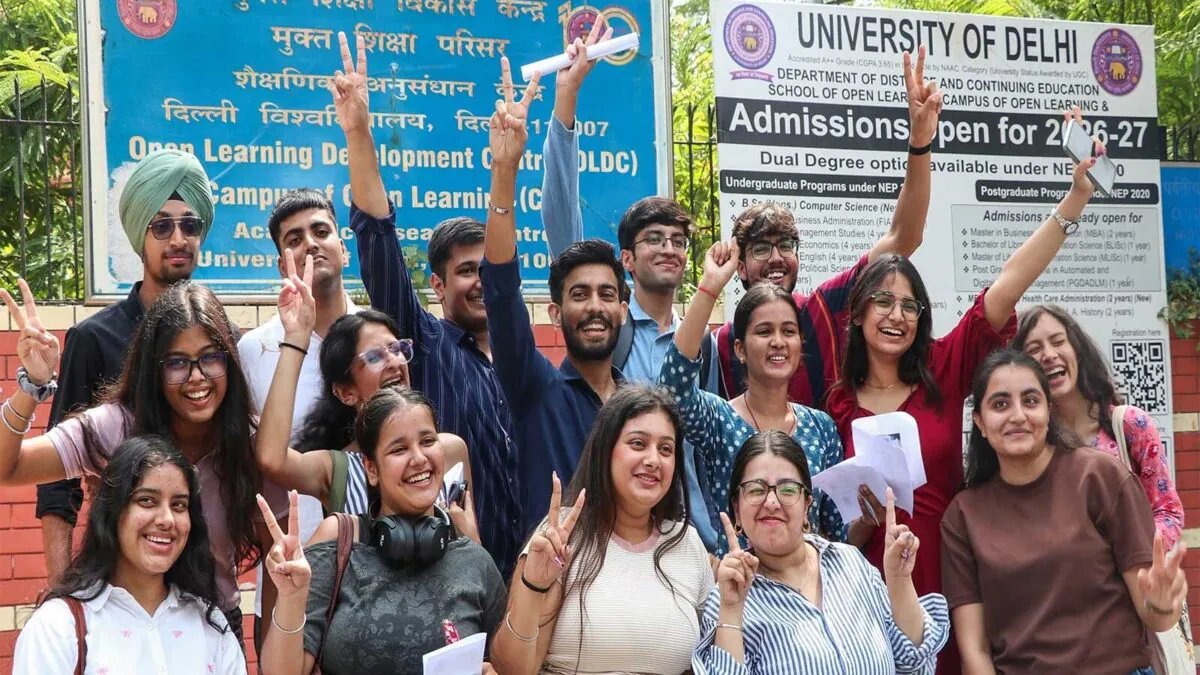
The disconnect between high-decibel campaigns and campus ballot outcomes stems from several key factors shaping contemporary student voting behaviour. Representational image/ANI
The Akhil Bharatiya Vidyarthi Parishad (ABVP) secured a dominant victory in the Delhi University Students’ Union (DUSU) elections, holding onto key central panel posts including the presidency. ABVP’s Yash Dabas clinched the President’s post after a close multi-round counting process against NSUI’s Vijay Shankar Meena, while the organisation also claimed the Secretary and Joint Secretary seats.
The mandate underscores ABVP’s entrenched organisational machinery across Delhi University campuses. The election also witnessed notable disruptions, including a decisive victory by Independent candidate Deepanshu Shokeen for the Vice President post. This outcome highlights a complex ground reality where localised student sentiment often diverges from top-down national political narratives.
Across premier constituent colleges in Delhi University, ABVP established a dominant presence by sweeping full panels at major institutions including SRCC, Aditi Mahavidyalaya, Bharati College, and Shivaji College. This trend extends beyond the capital, mirroring previous electoral cycles across state and central universities in Uttar Pradesh, Madhya Pradesh, and Rajasthan, where ABVP’s sustained, cadre-driven college-unit network consistently outperforms episodic opposition campaigns.
The Gap Between High-Decibel Campaigns and Campus Ballots
The DUSU election outcomes highlight a growing disconnect between high-visibility national youth initiatives and actual performance at campus polling booths.
- Rahul Gandhi’s ‘Chhatron Ki Goonj‘: Despite extensive youth outreach programmes and direct interactions aimed at mobilising university students across northern India, the Congress-affiliated National Students’ Union of India (NSUI) struggled to convert executive-level campaign momentum into majorities on campus. While NSUI mounted stiff resistance in individual seats, it failed to break ABVP’s general hold over the central panel.
- Civil Society & CJP Campaigns: Initiatives led by activist groups and non-governmental youth coalitions—focusing on civil rights, campus freedom, and systemic reforms—failed to make a measurable dent in ballot choices. Candidates backed by left-leaning alliances (AISA-SFI) remained confined to niche pockets without altering the main contest.
Why Top-Down Youth Campaigns Are Failing to Yield Electoral Dividends
The disconnect between high-decibel campaigns and campus ballot outcomes stems from several key factors shaping contemporary student voting behaviour:
- Hyper-Local Campus Governance vs National Rhetoric: Average university voters consistently prioritise immediate, tangible campus issues—hostel allocations, library hours, fee structures, and campus safety—over broad political ideologies or national campaign tours.
- Organisational Footprint: ABVP’s cadres maintain year-round, hyper-local engagement across individual college faculties. In contrast, episodic outreach drives like “Chhatron Ki Goonj” often fail to build the sustained cadre network required for effective voter turnout on polling day.
- Rise of Independent Alternatives: The surge in votes for Independent candidates demonstrates that when students seek an alternative to the dominant student wing, they frequently opt for localised, candidate-centric options rather than traditional opposition fronts.
Key Takeaways for Youth Politics
The student election results deliver a clear message to national political strategists: high-visibility outreach campaigns and social media traction cannot substitute for grounded, daily cadre work within educational institutions. Observers say that until opposition youth wings align their national narratives with everyday student grievances and build durable campus infrastructure, student union governance is likely to remain dominated by entrenched cadres.
Quick Answers
 Ask News18
ABVP candidate Yash Dabas won the Delhi University Students’ Union (DUSU) president’s post for 2026 after a close multi-round counting process against NSUI’s Vijay Shankar Meena.
Ask News18About the Author

Pathikrit Sen Gupta is a Senior Associate Editor with News18.com and likes to cut a long story short. He writes sporadically on Politics, Sports, Global Affairs, Space, Entertainment, And Food. He tra…Read More
September 19, 2026, 16:54 IST
Read More