
Private Schools Cannot Deny Govt-Allotted Admissions Under RTE Act, SC Calls It ‘National Mission’ | Education and Career News
Last Updated:
The Supreme Court reiterated that every child between 6 and 14 years of age has the right to free and compulsory education under Article 21A of the Constitution of India.




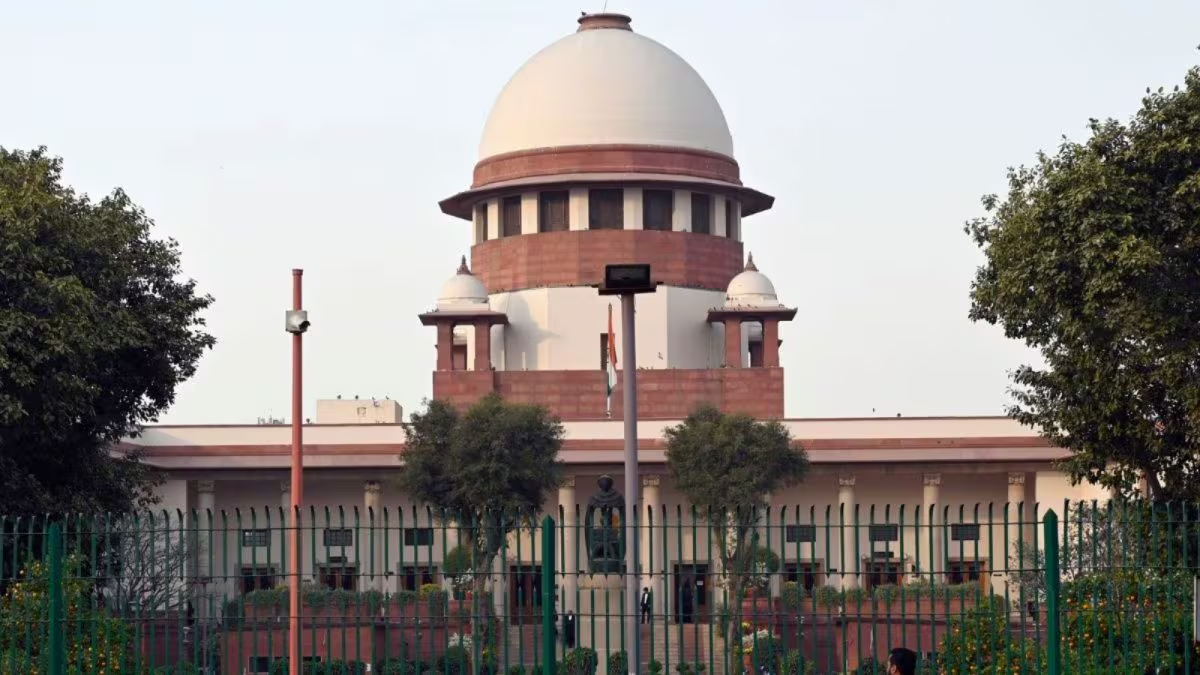
The Supreme Court underlined the importance of the “neighbourhood school” concept provided in the RTE Act. (Photo: PTI)
In a major step towards strengthening the right to education in the country, the Supreme Court has issued an important ruling: private schools can no longer refuse admission to children selected and allotted by the state government. This decision provides significant relief to children from economically weaker and vulnerable sections (EWS) and is seen as a crucial move towards ensuring equal opportunities in education.
What Is The Matter About?
The case concerned a private school in Lucknow, Uttar Pradesh, which denied admission to a girl from a poor family, despite her name appearing in the list issued by the state government. The school refused admission, citing doubts about her eligibility, reported News18 Hindi.
The girl’s family challenged this decision, after which the Allahabad High Court directed the school to grant her admission. The school then appealed to the Supreme Court, but its appeal has now been dismissed.
The Supreme Court bench made it clear that when the state government evaluates a child and recommends them to a school, it must grant admission immediately. Schools do not have the authority to independently decide a child’s eligibility. If a school has any objections, it may present them to the concerned government authority, but withholding or delaying admission is completely wrong.
RTE Act Termed A ‘National Mission’
The court described the reservation of 25% seats for children from poor and vulnerable sections under the Right to Education Act (RTE Act 2009) as extremely important. It stated that this is not just a legal obligation, but a “national mission” aimed at strengthening equality and the right to education in society. According to the court, proper implementation of this law has the potential to transform the structure of society.
The Supreme Court reiterated that every child between 6 and 14 years of age has the right to free and compulsory education under Article 21A of the Constitution of India. Denying admission to a child directly violates this fundamental right. The court also observed that delaying or refusing admission adversely affects a child’s education, which is completely unacceptable.
Emphasis On The Concept Of ‘Neighbourhood School’
The court underlined the importance of the “neighbourhood school” concept provided in the RTE Act. Its objective is to ensure that children from diverse social and economic backgrounds study together, thereby reducing discrimination and promoting mutual understanding. The court stated that this is a well-planned strategy to advance equality and social cohesion.
Responsibility Of Schools And Government
In its decision, the Supreme Court made it clear that the responsibility of ensuring the right to education does not rest solely on schools. It equally lies with the government, local administration, parents, and teachers. Everyone must work together to ensure that no child is deprived of education.
The court issued the following directions to private schools:
– Children sent by the state government must be granted admission immediately.
– There should be no delay in the admission process.
– Information about available seats must be made public in advance.
– Any arbitrariness or excuses will not be tolerated.
The Supreme Court also stated that if a child or their family faces difficulties in obtaining admission, courts should hear such cases promptly. Matters related to children should not be delayed, as they concern their future.
April 30, 2026, 14:13 IST
Read More