
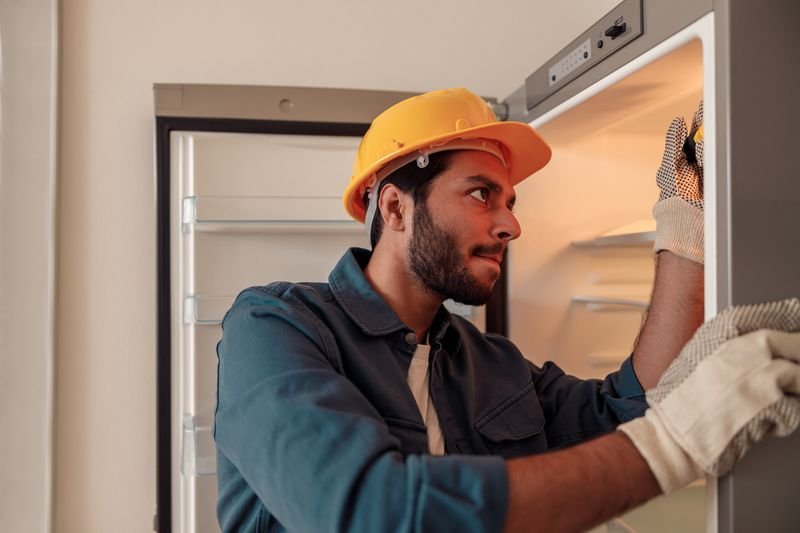
Bridging India’s skilled technician gap: Why the cooling industry needs more talent
As India’s food industry emerges as a key driver for economic growth, a skilled workforce will be essential to support its expansion. Commercial refrigeration plays a critical role across this ecosystem, helping reduce food waste and enabling an efficient farm-to-fork supply chain.
From foodservice and organised retail to quick commerce, cold chain logistics relies heavily on commercial cooling technicians to keep operations running. Yet, as modern food safety standards and specialised cold chains (for both food and pharmaceuticals) scale rapidly, the technical workforce has struggled to keep pace.
This growing skill deficit presents a clear mandate for educational institutions and the government to expand vocational curricula. Driven by sustainability goals and tech integration such as energy-efficient equipment, eco-friendly refrigerants, and smart monitoring what was once seen as a traditional trade is turning into a dynamic, tech-driven career.
The Demand and the Gap
Commercial refrigeration integral to India’s food security, pharmaceutical preservation, and hospitality operations. A malfunctioning freezer in a supermarket, a compromised cold storage unit at a pharmaceutical facility, or an improper display chiller in a quick-service restaurant (QSR) results in immediate inventory loss, financial damage, and potential public health risks.
As businesses scale across Tier-1, Tier-2, and Tier-3 cities, the reliability of cooling infrastructure hinges entirely on technical talent. However, the market faces a deep gap: we have a vast pool of generic repair personnel, but a shortage of trained professionals who understand the intricate mechanics, strict safety parameters, and precise operating requirements of modern commercial equipment. Commercial cooling needs to be formally recognised as a high-demand, skilled career track that offers long-term growth and stability.
Anatomy of a Skilled Commercial Refrigeration Professional
My experience in building and scaling Elanpro has shown me that a competent service technician must master two distinct capabilities: technical precision and professional soft skills. 0078Both are equally vital because technicians operate complex electrical and chemical systems directly inside active customer businesses.
- Technical Capabilities
A casual approach to service work is completely unacceptable. Minor oversights such as an improperly grounded plug or a hasty wiring connection can lead to severe safety hazards, fires, or permanent equipment failure. A skilled technician requires a deep operational understanding of:
- Refrigeration Circuits: Grasping the fundamental refrigeration cycle and the functional interplay between compressors, condensers, expansion valves, and evaporators.
- Electrical Safety and Wiring: Safely inspecting electrical connections, checking earthing protocols, and ensuring stable power delivery.
- Brazing and Piping: Executing clean, leak-proof brazing techniques for refrigeration copper tubing.
- Diagnostics and Testing: Using tools like ampere meters, manifold gauges, and leak detectors to pinpoint root causes rather than treating superficial symptoms.
- Process Discipline: Strictly following prescribed installation and servicing sequences rather than relying on shortcuts, guesswork, or improvised workarounds.
- Safety Protocols: Maintaining continuous compliance with personal protective equipment (PPE) and site safety rules.
A professional technician is inherently process-oriented systematically verifying earthing, checking operating pressures, following structured servicing sequences, and completing comprehensive safety protocols before commissioning any machine.
- Professional and Soft Skills
- Technical knowledge alone does not guarantee a successful service outcome. Unlike industrial machinery repaired in isolated factories, commercial refrigeration units are installed directly inside bustling kitchens, busy retail aisles, and high-end hotel spaces. Technicians represent the brand on-site. Therefore, they must:
- Handle Customer Concerns Professionally: Communicate technical issues in simple, transparent terms and manage high-pressure situations calmly.
- Minimise Site Disruption: Work discreetly inside operational venues without disturbing ongoing business or dining environments.
- Maintain Strict Hygiene: Keep the workspace immaculate, which is vital when working near food storage and commercial kitchens.
- Maintain Consistency: Follow exact repair standards even during routine maintenance calls.
- Provide Clear Communication: Detail what was diagnosed, what repairs were executed, and what preventative steps the client should take next.
Bridging the skill gap: Industry and institutional training
Industrial Training Institutes (ITIs) and vocational programs provide an essential theoretical foundation, but classroom instruction alone cannot produce a fully confident technician. Commercial refrigeration servicing is a hands-on trade. Trainees must see how theoretical principles apply to live equipment, fluctuating ambient conditions, and unexpected field failures.
To bridge this gap, industry leadership is necessary. Programs like Elanpro’s Cool Skills, Bright Future initiative are designed to bridge theory and practice by offering hands-on training on actual commercial equipment, coupled with real-world site experience under senior mentors. Young technicians must serve guided apprenticeships before working independently in the field.
A specialised, future-ready career
The cooling industry technician’s role is evolving into a specialised career. As refrigeration technology advances, the technician of tomorrow must adapt to key shifts:
- Energy Efficiency: Optimising equipment performance to reduce operational costs and carbon footprints.
- Low-GWP & Natural Refrigerants: Working safely with next-generation, eco-friendly hydrocarbon refrigerants.
- Electronics & Smart Controls: Diagnosing digital controllers, variable-speed drives, and automated defrost systems.
- Connected Systems (IoT): Interpreting data from smart, sensor-enabled equipment to perform predictive maintenance before breakdowns happen.
Commercial refrigeration service is no longer a simple mechanical job—it is a specialised, tech-driven profession. By investing in structured training, industry mentorship, and process-driven standards, we can transform cooling service into an attractive, high-value career choice for India’s youth while strengthening the nation’s critical cold chain infrastructure.
Apply for Courses
- ITI Refrigeration and Air Conditioning (RAC) Technician course
Duration: 2 years
Eligibility: Pass in Class X (High School) with Science and Mathematics.
- Elanpro Cool Skills Bright Future
Duration: 45 days
Eligibility: Pass in Class 10 (High School)