
IIT Delhi Director Suggests 5-Year BTech Programmes, Says ‘One-Size-Fits-All’ Approach Not Working | Education and Career News
Last Updated:
The issue, according to Prof Ramgopal Rao, is whether students with such different levels of academic preparedness can reasonably be expected to learn at the same pace.




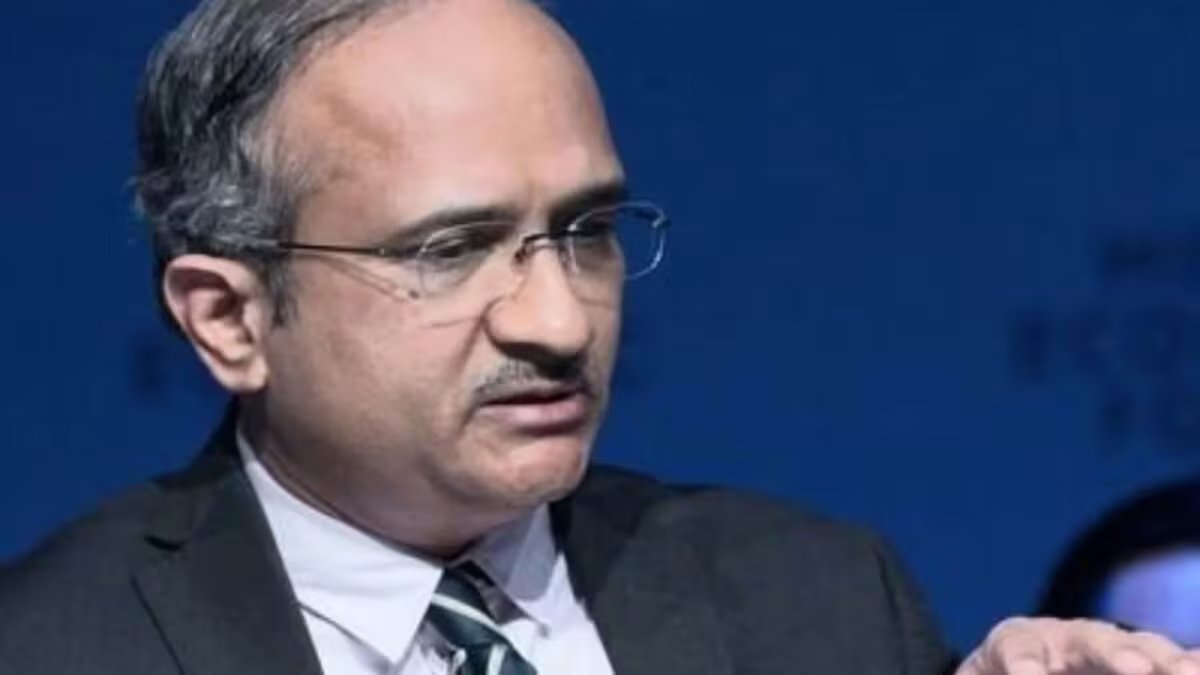
Prof Ramgopal Rao proposed that IITs consider moving their BTech programmes to five years. (File Photo)
IIT Delhi Director V. Ramgopal Rao has called for a rethink of the way BTech programmes are structured across the IIT system, proposing that UG programmes be designed as five-year courses to give students greater flexibility and academic support.
His comments come amid the controversy surrounding the death of an IIT Bombay student and the questions raised over academic pressure, examination rules and the treatment of students on campus.
In a statement, Rao also defended IIT Bombay professor Suryanarayana Doola, who has faced criticism following the incident. Rao said he knows Doola personally and described him as one of the finest faculty members he has known in the IIT system and a person of high integrity. He said concerns surrounding the controversy should be examined fairly and that a public campaign against an individual would not serve any purpose.
5-Year BTech Courses Could Be The Solution?
Rao proposed that IITs consider moving their BTech programmes to five years. Under his proposal, students who meet the required credit requirements could complete the programme in four years or potentially three-and-a-half years. Students who need more time could spread their courses over five years and receive additional academic support.
Such support, he suggested, could include recorded lectures, online learning material and language assistance where required. The pace of a student’s programme, Rao argued, should be determined by their academic performance after joining the IIT rather than their admission category or JEE Advanced rank.
“No one would be singled out for taking a fifth year,” he said.
Rao also stressed that extending the time available to students should not mean lowering academic standards.
“IITs must uphold academic standards,” he said, while arguing that institutions also have a responsibility to recognise that students do not enter with the same level of preparation or learn at the same pace.
The issue, according to Rao, is whether students with such different levels of academic preparedness can reasonably be expected to learn at the same pace. He said there is nothing wrong with opening the country’s premier institutions to students from different backgrounds. However, he argued that IITs also need to adapt their teaching-learning methods to this diversity.
Rao said faculty members face a difficult situation when teaching students with widely different levels of preparedness. “Move too slowly, and some students lose interest. Move too quickly, and others are left behind,” he said.
I am disturbed to see Prof. Suryanarayana Doola being vilified over the recent controversy at IIT Bombay. I know Surya personally. He is one of the finest faculty members I have known in the IIT system, and a gentleman of the highest integrity. Whatever concerns have been raised… pic.twitter.com/PwlAWQWvW9— V. Ramgopal Rao, Ph.D. (@ramgopal_rao) September 23, 2026
Rao, who has more than 25 years of experience at IIT Bombay and IIT Delhi, said many of the challenges currently being seen across IITs stem from what he described as a “one size fits all” approach to teaching and learning.
According to Rao, IIT classrooms have become increasingly heterogeneous. Students admitted to the same programme can have widely different JEE Advanced ranks and academic backgrounds.
“With students coming through an intensive coaching culture, and classrooms bringing together students whose JEE Advanced ranks range from single digits to five digits (in the same class -for example CSE in IIT Delhi), we now have highly heterogeneous classrooms across the IIT system. Language also further adds to the challenge,” he added.
Quick Answers
 Ask News18
IIT Delhi Director V. Ramgopal Rao proposed moving BTech programmes to five-year courses to give students greater flexibility and academic support, allowing those who need more time to spread their coursework over five years.
Ask News18About the Author

A team of reporters, writers and editors brings you news, analyses and information on college and school admissions, board and competitive exams, career options, topper interviews, job notifications, …Read More
September 23, 2026, 14:46 IST
Read More