
AI, Blockchain And Tighter Security Measures Part Of NEET Reforms: Centre To SC | Education and Career News
Last Updated:
NEET UG: To prevent a repeat of earlier issues, the affidavit said the NTA has implemented a 10-stage security protocol, described by officials as a “fortress” model.




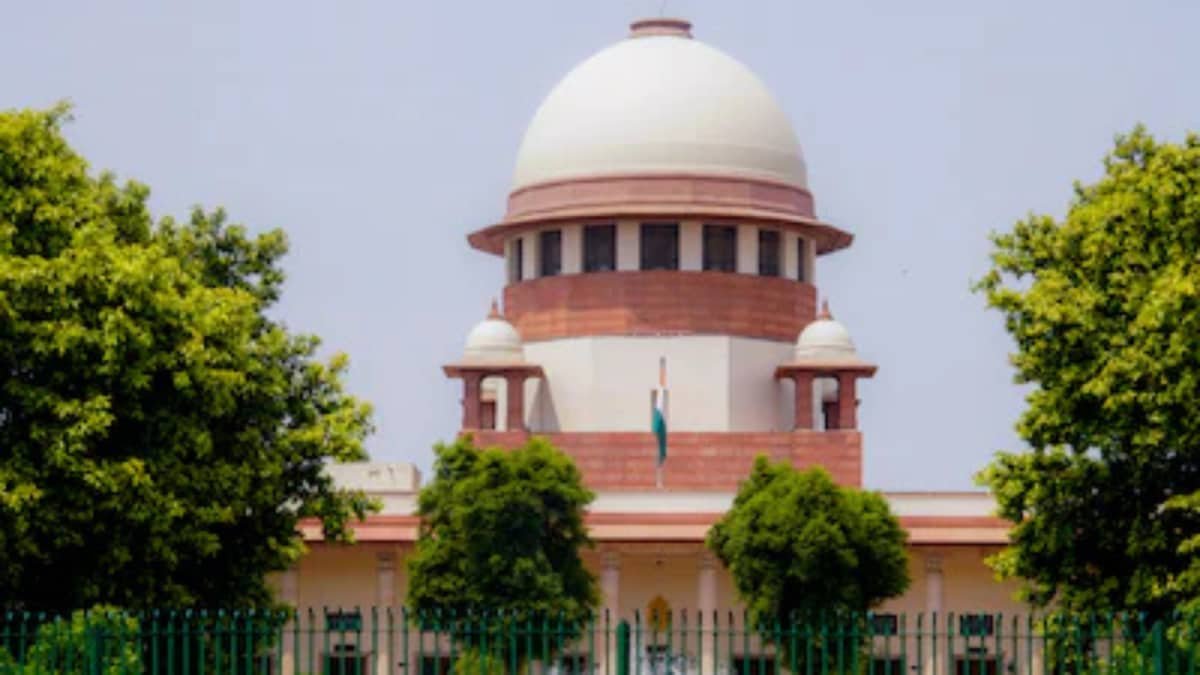
Supreme Court of India (Image used for representation)
The Centre has informed the Supreme Court that it has undertaken a comprehensive overhaul of the National Eligibility-cum-Entrance Test (NEET) examination process to eliminate paper leaks and address systemic shortcomings.
In a compliance affidavit filed before a bench headed by Justice P S Narasimha, the Ministry of Education said the reforms are aimed at creating a robust and institutionalised system that preserves institutional memory, strengthens examination security and prevents future incidents of paper leaks and other malpractices.
The affidavit was filed in response to the apex court’s May 29 direction asking the Union government to explain how future NEET examinations would be conducted and how regulatory authorities would build and retain institutional memory to improve examination processes over the years.
The government said that while the Ministry of Education oversees the National Testing Agency (NTA), NEET is conducted by the NTA on behalf of the Ministry of Health and Family Welfare, the test-indenting agency.
It also clarified that the affidavit does not comment on the merits of the ongoing CBI investigation into the NEET-UG 2026 paper leak.
The Centre said Parliament has further strengthened the legal framework against examination fraud through the Public Examinations (Prevention of Unfair Means) Amendment Act, 2026, building on the 2024 law that criminalised question paper leaks, impersonation, tampering with computer systems and other examination-related offences.
According to the affidavit, the amendments reflect the government’s resolve to impose even stricter penalties on those compromising the integrity of public examinations.
The government also informed the court that it has constituted a High-Powered Task Force (HPTF) on Examination Reforms to recommend structural improvements in the conduct of public examinations and modernise examination systems.
It said the reforms are intended to create a stronger institutional framework capable of learning from previous examination cycles through the systematic use of experience, data and information, thereby reducing vulnerabilities and improving oversight.
The affidavit said the HPTF, constituted on July 27, is headed by Infosys co-founder and Aadhaar architect Nandan Nilekani.
The task force has been mandated to submit recommendations within three months on end-to-end reforms, with a focus on leveraging AI and blockchain to strengthen examination security, it said.
To prevent a repeat of earlier issues, the affidavit said the NTA has implemented a 10-stage security protocol, described by officials as a “fortress” model.
To prevent leaks during the translation stage, the government is using “air-gapped” (offline) AI systems for initial drafting, followed by limited human verification, it said.
Every question paper and OMR sheet now carries a unique serial number linked to a specific candidate, the affidavit said.
Question papers are housed in six layers of tamper-evident packaging, including steel trunks fitted with one-time-use locks that can only be cut open, it added.
The affidavit also highlighted that the Public Examinations (Prevention of Unfair Means) Amendment Act, 2026, now provides for imprisonment of up to 10 years and fines of up to Rs 1 crore.
On May 12, the NTA cancelled the NEET examination held on May 3 following allegations of a paper leak. A re-examination was conducted on June 21.
After the alleged leak of NEET-UG question papers in 2024, the apex court had refused to cancel the examination but issued several directions aimed at tackling paper leaks and laid down criteria for cancelling public examinations.
While hearing the pleas on May 25, the top court observed that it was unfortunate that the NTA had not learnt lessons from the earlier NEET paper leak.
It had sought responses from the Centre, the NTA and the CBI on pleas seeking the replacement of the testing agency with a robust and autonomous body to conduct the medical entrance examination.
The apex court had issued notices on the pleas, including one filed by the Federation of All India Medical Association through advocate Tanvi Dubey.
About the Author

A team of reporters, writers and editors brings you news, analyses and information on college and school admissions, board and competitive exams, career options, topper interviews, job notifications, …Read More
August 05, 2026, 12:50 IST
Read More