
Six Years Of NEP 2020: From CUET To Skill-Based Learning — What Has Been Implemented So Far | Education and Career News
Last Updated:
NEP 2020 introduced major reforms in higher education, including multidisciplinary learning, and opportunities for students to enter and exit programmes at different stages.




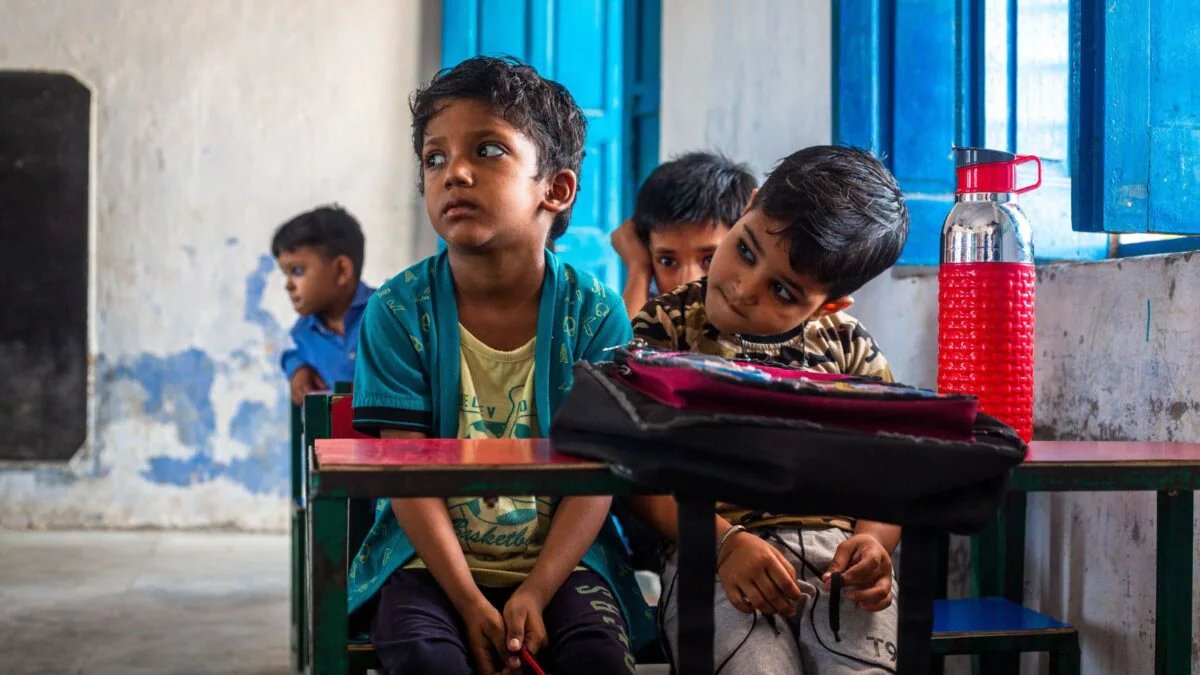
NEP’s foundational learning programmes aims to focus on ensuring that children acquire basic reading and numeracy skills in the early grades. (Image: Pexels)
Six years after the launch of the National Education Policy (NEP) 2020, India’s education landscape has witnessed a series of structural changes aimed at reshaping school and higher education. Introduced on July 29, 2020, the policy promised a shift from rote learning towards competency-based education, greater flexibility, skill development and a stronger focus on foundational learning.
Let’s take a look at what initiatives have been launched so far:
From 10+2 to 5+3+3+4: A New School Education Framework
One of the most visible changes under NEP 2020 has been the introduction of the 5+3+3+4 curricular structure, replacing the earlier 10+2 model. The new framework places greater emphasis on early childhood care and education, recognising the importance of learning during the foundational years. The first five years denote formative years where a child will spend the years in preschool and primary school. The next three years will be preparation phase which is followed by middle school. The last four years will be secondary education.
The implementation of foundational learning programmes, including the NIPUN Bharat Mission, has focused on ensuring that children acquire basic reading and numeracy skills in the early grades. Schools in UP and Delhi have begun adopting competency-based teaching methods and revised learning materials aligned with NEP objectives.
Multiple Entry and Exit Options, ABC System
NEP 2020 introduced major reforms in higher education, including multidisciplinary learning, flexible degree structures and opportunities for students to enter and exit programmes at different stages. According to the provision, the students can drop their course and resume it at a later stage as and when they desire or deem it worth pursuing. Students can also acquire courses ranging from science, technology, mathematics, liberal arts, languages, humanities, social sciences, professional skills, vocational skills through multidisciplinary and holistic learning.
The Academic Bank of Credits (ABC) system was introduced to allow students to store and transfer academic credits, supporting greater mobility between institutions. Several universities have also started adopting four-year undergraduate programmes and revised curricula designed to provide students with broader academic choices.
The Common University Entrance Test (CUET), which was originally introduced in 2010 as the Central Universities Common Entrance Test (CUCET), was later revamped and relaunched by the National Testing Agency (NTA) in March 2022 under the policy.
Vocational Education and Skill-Based Learning
A key focus of NEP 2020 has been connecting education with employability. The policy recommended introducing vocational education from the school level, including internships and exposure to practical skills.
Schools and higher education institutions have gradually expanded skill-based courses, although experts argue that wider implementation requires stronger industry partnerships, trained teachers and better infrastructure.
Online Learning
The years following NEP 2020 have also seen a rapid expansion of digital education. Online learning platforms, digital content repositories and technology-enabled classrooms have become more prominent, particularly after the disruption caused by the COVID-19 pandemic.
However, the digital divide remains a challenge, especially for students in rural and economically disadvantaged communities who may lack reliable internet access or digital devices.
Challenges in the Road Ahead
Despite progress, the implementation of NEP 2020 remains uneven. Education is a concurrent subject in India, meaning both the central and state governments play important roles in execution. Differences in resources, infrastructure and administrative capacity have affected the speed of adoption across regions.
Teacher training continues to be a critical factor. Since many reforms depend on new teaching approaches, assessment methods and curriculum changes, preparing educators remains essential for successful implementation.
There are also concerns regarding funding, institutional readiness and the ability of schools and universities to fully adopt flexible and multidisciplinary models.
About the Author

A team of reporters, writers and editors brings you news, analyses and information on college and school admissions, board and competitive exams, career options, topper interviews, job notifications, …Read More
Read More