
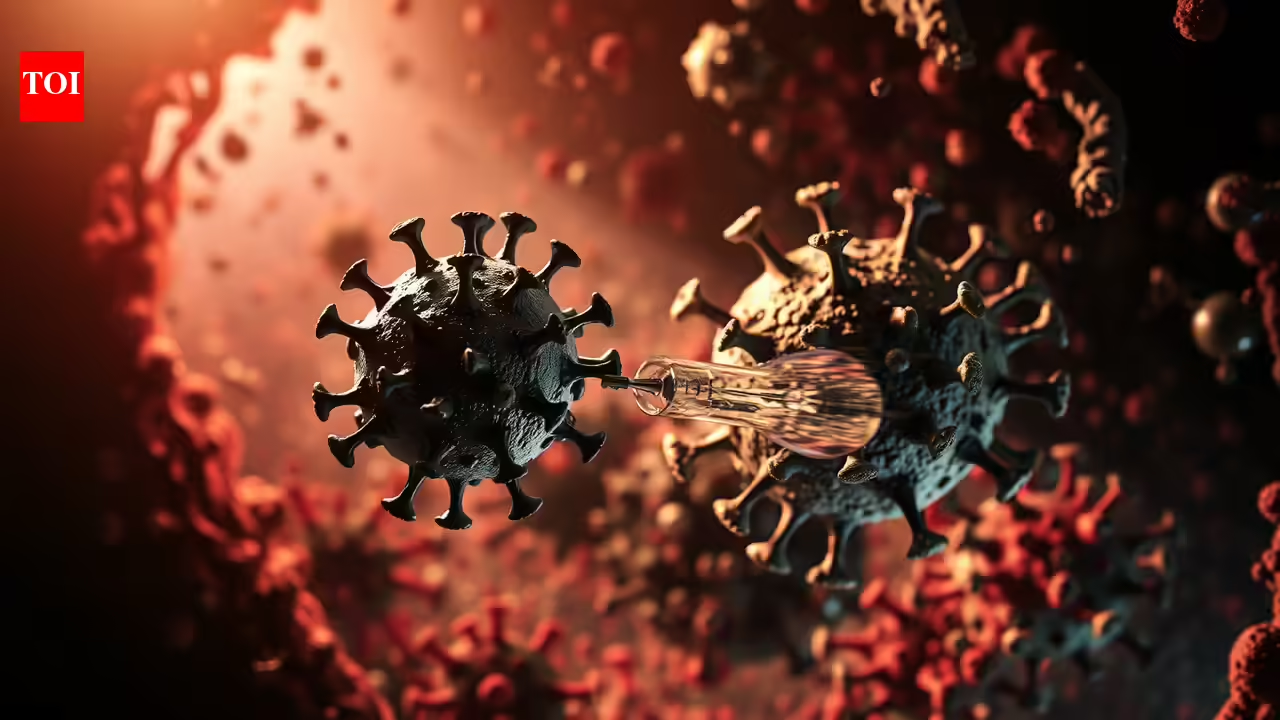
Why don’t antibiotics work against viruses? Understanding bacteria, viruses, and antimicrobial resistance
The growing threat of antimicrobial resistance (AMR) has become one of the world’s most pressing public health concerns. According to the World Health Organization (WHO), bacterial antimicrobial resistance (AMR) directly causes nearly 1.27 million deaths every year and contributes to approximately 4.95 million deaths globally. If effective measures are not taken, WHO and global public health agencies project that AMR could contribute to up to 10 million deaths annually by 2050, surpassing deaths from many major diseases. Despite repeated awareness campaigns, antibiotics continue to be misused for viral illnesses such as the common cold, influenza, COVID-19, and dengue. This unnecessary use accelerates antibiotic resistance, making bacterial infections harder, and sometimes impossible, to treat.
The concept in simple terms
People often confuse bacteria and viruses, assuming that antibiotics can treat both. In reality, they are fundamentally different.What are bacteria?Bacteria are single-celled living organisms. They possess their own cellular machinery, allowing them to grow, reproduce, and survive independently in suitable environments.
- Most bacteria are harmless or even beneficial.
- Some help digest food and produce vitamins.
- Others cause diseases such as tuberculosis, typhoid, pneumonia, and urinary tract infections.
What are viruses?Viruses are not considered fully living organisms because they cannot survive or reproduce independently.A virus consists mainly of:
- Genetic material (DNA or RNA)
- A protective protein coat
- Sometimes an outer lipid envelope
Unlike bacteria, viruses must invade a host cell and hijack its machinery to make copies of themselves.Common viral diseases include:
- Influenza
- COVID-19
- Measles
- Chickenpox
- HIV
- Dengue
- Hepatitis
Why antibiotics fail against virusesAntibiotics target structures or processes found only in bacteria, such as:
- Cell wall formation
- Protein synthesis
- DNA replication
- Metabolic pathways
Viruses lack these bacterial structures. Since they reproduce using human cells, antibiotics have nothing to attack, making them completely ineffective against viral infections.Instead, viral diseases are treated using:
- Antiviral medicines (for certain viruses)
- Vaccines (to prevent infection)
- Supportive care, such as hydration and fever management
How it works
Understanding how bacteria and viruses behave explains why antibiotics work against one but not the other.How bacteria multiplyBacteria reproduce through binary fission, where one bacterial cell divides into two identical daughter cells. During this process:
- The bacterial DNA replicates.
- The cell grows.
- The cell wall forms a dividing partition.
- Two new bacterial cells are produced.
Antibiotics interrupt one or more of these steps, stopping bacterial growth or killing the bacteria.How viruses multiplyViruses cannot reproduce on their own. Their life cycle involves:
- Attachment to a host cell.
- Entry into the cell.
- Release of viral genetic material.
- Replication using the host cell’s machinery.
- Assembly of new virus particles.
- Release to infect other cells.
Since viruses rely almost entirely on human cells for replication, drugs must target viral proteins without damaging healthy human cells, a much more challenging task than treating bacterial infections.
What is Antimicrobial Resistance (AMR)?
Antimicrobial resistance occurs when microorganisms evolve so that medicines no longer kill them effectively.AMR includes resistance in:
- Bacteria (antibiotic resistance)
- Viruses (antiviral resistance)
- Fungi (antifungal resistance)
- Parasites (antiparasitic resistance)
The most common and serious form is antibiotic resistance.How antibiotic resistance developsWhen antibiotics are used:
- Most bacteria die.
- A few naturally resistant bacteria survive.
- These resistant bacteria multiply.
- They may also transfer resistance genes to other bacteria.
Over time, antibiotics become less effective.Major causes
- Using antibiotics for viral infections
- Self-medication
- Incomplete antibiotic courses
- Over-prescription
- Use of antibiotics in livestock and poultry
- Poor sanitation and infection control
What are the consequences?
- Longer hospital stays
- Increased medical costs
- Higher mortality
- More difficult surgeries
- Reduced effectiveness of chemotherapy and organ transplantation
The WHO considers AMR one of the top global health threats of the 21st century.
Important Institutions, Laws or Treaties
World Health Organization (WHO)It coordinates the Global Action Plan on Antimicrobial Resistance and promotes rational antibiotic use. The organisation also encourages surveillance of resistant infections worldwide.Food and Agriculture Organization (FAO)It addresses antibiotic use in agriculture and animal husbandry.World Organisation for Animal Health (WOAH)Develops standards for responsible antimicrobial use in animals.United Nations (UN)In 2016, the UN General Assembly adopted a political declaration recognizing AMR as a major global threat requiring coordinated international action.Global Antimicrobial Resistance and Use Surveillance System (GLASS)Launched by WHO to collect standardized global data on antimicrobial resistance and antibiotic consumption.
India Angle
India carries one of the world’s highest burdens of infectious diseases and is also among the largest consumers of antibiotics.Key initiativesNational Action Plan on Antimicrobial Resistance (NAP-AMR)Launched in 2017, it focuses on:
- Public awareness
- Surveillance
- Infection prevention
- Rational antibiotic use
- Research and innovation
Red Line CampaignMedicines containing antibiotics carry a red vertical line on their packaging, reminding people that these drugs should only be taken on a doctor’s prescription.Schedule H and Schedule H1 DrugsThese antibiotics cannot legally be sold without a valid prescription.
National Centre for Disease Control (NCDC)- Coordinates AMR surveillance across India.
Indian Council of Medical Research (ICMR)
Conducts nationwide surveillance and research on resistant bacteria and promotes antibiotic stewardship programmes in hospitals.Challenges in India
- Easy over-the-counter availability of antibiotics
- Self-medication
- High burden of infectious diseases
- Poor sanitation in some regions
- Antibiotic use in livestock farming
Prelims fact box
One Mains QuestionQ. Antimicrobial resistance has emerged as one of the greatest public health challenges of the 21st century. Discuss the causes, consequences and measures adopted globally and by India to combat antimicrobial resistance.MCQs with Answers1. Antibiotics are primarily effective against:A. VirusesB. FungiC. BacteriaD. ParasitesAnswer: C2. Which of the following reproduces by binary fission?A. VirusB. BacteriumC. PrionD. ViroidAnswer: B3. Which organisation launched GLASS?A. UNESCOB. WHOC. UNICEFD. FAOAnswer: B4. The Red Line Campaign in India is associated with:A. Blood donationB. VaccinationC. Rational antibiotic useD. HIV awarenessAnswer: C5. Which statement is correct?A. Antibiotics destroy viral envelopes.B. Viruses possess their own metabolism.C. Antibiotics target bacterial structures absent in viruses.D. Viruses divide by binary fission.Answer: CFive Key Terms to Remember
- Antibiotic – A medicine that kills or inhibits the growth of bacteria.
- Virus – A microscopic infectious agent that can reproduce only inside living cells.
- Binary Fission – The process by which bacteria divide into two identical cells.
- Antimicrobial Resistance (AMR) – The ability of microorganisms to resist the effects of medicines designed to kill them.
- Antibiotic Stewardship – Coordinated efforts to ensure antibiotics are used appropriately to preserve their effectiveness.
FAQs1. Can antibiotics cure viral fever?No. Antibiotics are ineffective against viral infections. Most viral fevers require supportive care unless a specific antiviral drug is available.2. Why do doctors sometimes prescribe antibiotics during viral illnesses?If there is evidence or a high risk of a secondary bacterial infection, antibiotics may be prescribed to treat the bacterial infection, not the virus itself.3. What is the difference between antibiotics and antivirals?Antibiotics target bacteria by disrupting bacterial structures or functions, whereas antivirals inhibit specific stages of viral replication.4. Why is antibiotic misuse dangerous?Misuse promotes antibiotic resistance, making future bacterial infections more difficult to treat and increasing the risk of severe illness and death.5. How can antimicrobial resistance be prevented?AMR can be reduced by using antibiotics only when prescribed, completing the full course of treatment, maintaining good hygiene, getting vaccinated, preventing infections, and avoiding the unnecessary use of antibiotics in humans and animals.