
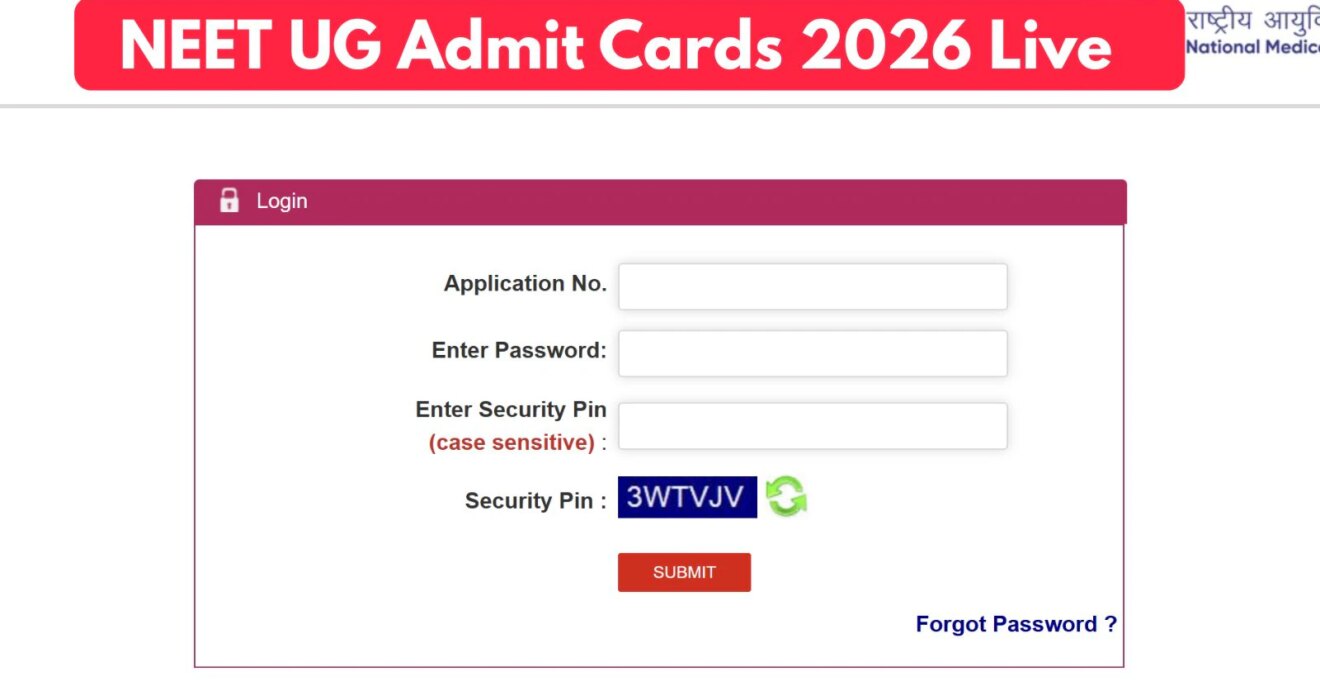
NEET Re-Exam Admit Card 2026 Live Updates: NTA NEET UG 2026 Admit Card Date, Time, Download Direct Link at neet.nta.nic.in
NTA NEET UG 2026 Admit Card Live Updates: The National Testing Agency (NTA) will release the admit cards for the re-NEET UG exam likely next week. The NEET UG re-exam will be held on June 21 between 2 pm and 5: 15 pm. The admit cards will be available at the official website of NTA- neet.nta.nic.in.
This year, around 22,75,011 students have registered for the exam, while 22,05,035 students had appeared for the exam on May 3 across the country.
Story continues below this ad
The admit cards consist of the following information: candidate’s name, application number, examination centre, timing of the exam. In case their is any mistakes in the admit card, students should contact the NTA authorities using their helpline at the earliest.
Candidates appearing for the NEET UG 2026 re-examination can download their admit cards from the official website, neet.nta.nic.in. To access it, visit the website and click on the ‘NEET UG 2026 admit card’ link. Enter your login credentials including application number, date of birth or password, and the security captcha, then click submit. The admit card will open in a new window. Download and save a copy for future reference.
Previously, the NEET UG 2026 exam was held on May 3 this year in offline mode. The exam will be held once again due to the leak of the question paper. The exam is being held once again with the previous exam getting fully cancelled and a CBI probe ordered.

The exam was first conducted on May 3, and days after the exam, it was cancelled as the allegedly the paper got leak.
The question paper consists of 180 questions. Physics and chemistry consist of 45 questions from each subject, while biology consists of 90 questions. The exam was held for 3 hours. Candidates with PwD will get an extra hour. The candidates can choose the question paper in either of the languages mentioned – English, Hindi or other regional languages, which include Assamese, Bengali, Gujarati, Marathi, Kannada, Tamil, Telugu, Malayalam, Odia, Punjabi and Urdu respectively.