
AME: The career AI can’t ground
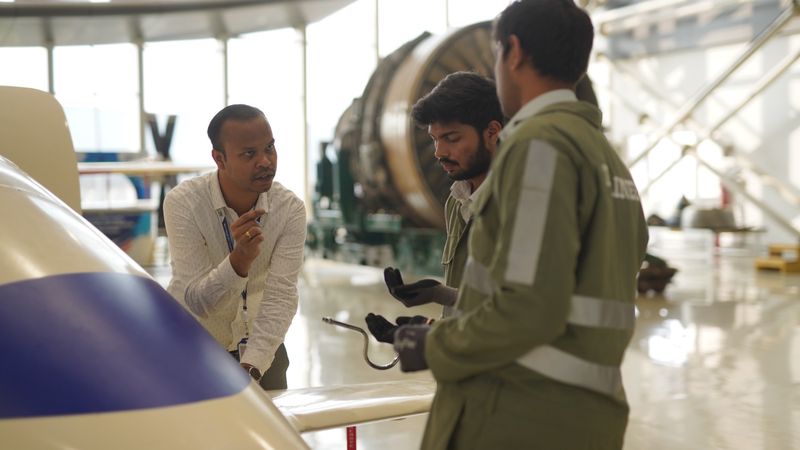
Artificial intelligence may be writing software, automating offices and even piloting experimental systems, but there is one critical area where human expertise still reigns supreme — aircraft safety. No algorithm can crawl into an aircraft fuselage at midnight, diagnose a malfunctioning landing gear system and legally certify an Airbus A320 fit for take-off before dawn. That responsibility belongs to a licensed Aircraft Maintenance Engineer (AME).
At a time when students are increasingly anxious about careers becoming obsolete, AME is gaining attention as one of the few professions that remains firmly human-centric. Every commercial flight, regardless of how advanced its technology becomes, must be physically inspected, maintained and certified by licensed engineers under strict aviation regulations framed by bodies such as the DGCA and EASA.
Why demand is rising
The aviation sector is expanding at a rapid pace. Airlines are adding fleets, airports are growing and Maintenance, Repair and Overhaul (MRO) hubs are multiplying across India and abroad. As cockpit automation increases, the demand for engineers capable of maintaining sophisticated aircraft systems is also climbing steadily.
According to the International Air Transport Association (IATA), the world will require more than 6 lakh new aircraft maintenance technicians over the next two decades. India, with its booming domestic aviation market, is expected to become a major employment hub for AMEs.
What the course offers
Aircraft Maintenance Engineering is a specialised technical programme that combines mechanical systems, avionics, electronics and structural engineering. The profession is built around real-time troubleshooting, operational discipline and high-pressure decision-making.
Students can pursue programmes ranging from two to four years. Typically, the training includes two years of classroom and practical instruction followed by hands-on maintenance experience required for obtaining a full DGCA licence.
The course broadly offers two major streams:
AME B1.1 (Mechanical): Focuses on jet engines, turbine-powered aircraft and mechanical structures.
AME B2 (Avionics): Deals with electrical systems, instrumentation, electronics and radio navigation technology.
Eligibility and skills required
Students who have completed Plus II with physics, chemistry and mathematics, or those holding a three-year engineering diploma, are eligible. Candidates must also be medically fit and free from colour blindness. Most institutes conduct entrance examinations for admissions.
Beyond academics, the field demands precision, composure, analytical thinking and a strong sense of responsibility.
Career opportunities and salaries
AME graduates find opportunities with airlines, airports and MRO companies in roles such as line maintenance technician, base maintenance engineer, avionics specialist and component technician. Major recruiters include companies like IndiGo, Air India and Akasa Air.
Starting salaries in India generally range between Rs 3.5 lakh and Rs 6 lakh annually for trainees, while licensed and type-rated engineers can earn Rs 12 lakh to Rs 25 lakh or more. International opportunities in regions such as the UAE, Singapore and Europe further enhance the profession’s appeal.
In an era where automation threatens many conventional jobs, Aircraft Maintenance Engineering stands out as a career where human accountability, technical expertise and trust cannot be replaced by machines.