
CBSE Says Class 9 Third Language Won’t Affect Promotion To Class 10, But There’s A Catch: Pass Rules Explained | Education and Career News
Last Updated:
CBSE has made it clear that the third language (R3) will be assessed only through an internal school-based assessment. But what happens if you fail the exam?




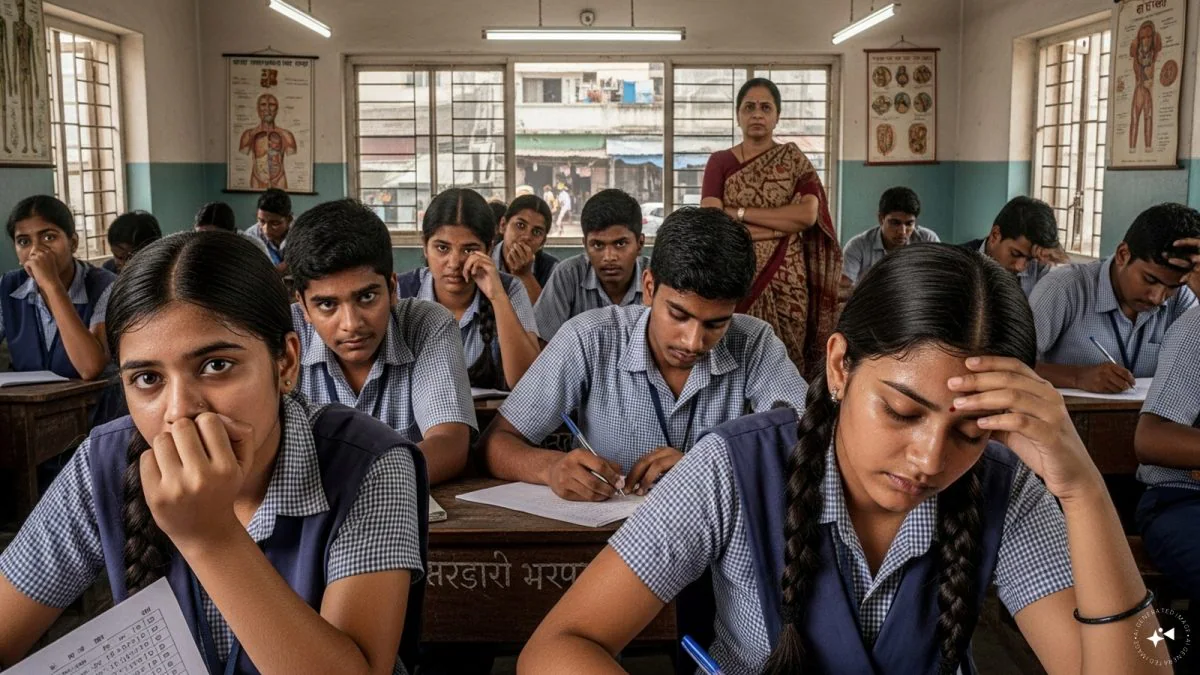
CBSE has clarified that there will be no Board examination for the third language when this batch reaches Class 10. (AI-Generated Image)
The Central Board of Secondary Education (CBSE) has clarified how the third language (R3) will be implemented for students entering Class 9 from the 2026–27 academic session. Under the new guidelines aligned with the National Education Policy (NEP) 2020, all Class 9 students will study three languages, with at least two being Bhartiya Bhashas (Indian languages). However, the Board has made it clear that the third language (R3) will be assessed only through an internal school-based assessment.
Passing R3 Not Mandatory?
Students who do not qualify in the Class 9 R3 assessment will not be detained. They will still be promoted to Class 10 for the 2027–28 academic session. However, they must clear the pending Class 9 R3 assessment while studying in Class 10.
No Board Exam For R3
CBSE has also clarified that there will be no Board examination for the third language when this batch reaches Class 10. Instead, schools will continue to conduct internal assessments. To receive the CBSE Secondary School Examination Pass Certificate, students must successfully clear the school-based R3 assessment in Class 10. Those who are unable to qualify initially will be given another opportunity through reassessment before the declaration of the Class 10 results.
The Board said students currently in Class 9 (2026–27 batch) will continue with the same three-language combination they studied in Class 8, with one of those languages designated as the third language (R3). As a one-time transitional relaxation, students who are already studying two non-Indian languages may continue with those languages but will have to add one Indian language as R3.
CBSE reiterated that the revised language policy has been designed to promote multilingualism while ensuring that students are not placed under unnecessary examination pressure. “Flexible Staffing provisions have been provided. Schools are required to engage existing teachers (with functional proficiency), retired teachers, postgraduates, or use Sahodaya clusters (inter-school sharing) and virtual/hybrid teaching,” the Board said in an official notice.
Students entering Class 9 in the 2026-27 academic session will study three languages, with at least two being Indian languages, as part of the National Education Policy (NEP) 2020 alignment.
About the Author

A team of reporters, writers and editors brings you news, analyses and information on college and school admissions, board and competitive exams, career options, topper interviews, job notifications, …Read More
Read More